
Care
Golf Club Cleaning Kit: The Complete UK Care Guide
Sandy Grewal · 13 October 2026
Table of Contents

A proper golf club cleaning kit needs a stiff groove brush, a soft bristle brush, a microfibre towel and a biodegradable cleaning solution. In a UK equipment test, dirty grooves cut backspin from 5,399 rpm to 2,566 rpm, a 52.5% reduction.
That makes club cleaning performance gear, not first-tee decoration. Wet turf, sticky mud and sandy divots are normal in British golf, and a cloth alone won't clear compacted debris from the grooves. The right routine protects contact, spin and the finish on clubs that represent a serious investment.
Why Your Golf Club Cleaning Kit Matters for Performance
A golf club face only works as intended when the ball can meet clean grooves. Mud between the ball and face changes friction, particularly on wedges and short irons, where predictable stopping power matters most. A dirty club can still look presentable from a few paces away while performing poorly at the moment of impact.
The UK test mentioned above found more than a cosmetic difference. Ball speed fell by 7 mph, backspin dropped from 5,399 rpm to 2,566 rpm, and the dirty shot flew lower with a shallower descent. Those figures come from the UK dirty golf clubs equipment test, and they explain why a wet face deserves attention before the next shot.
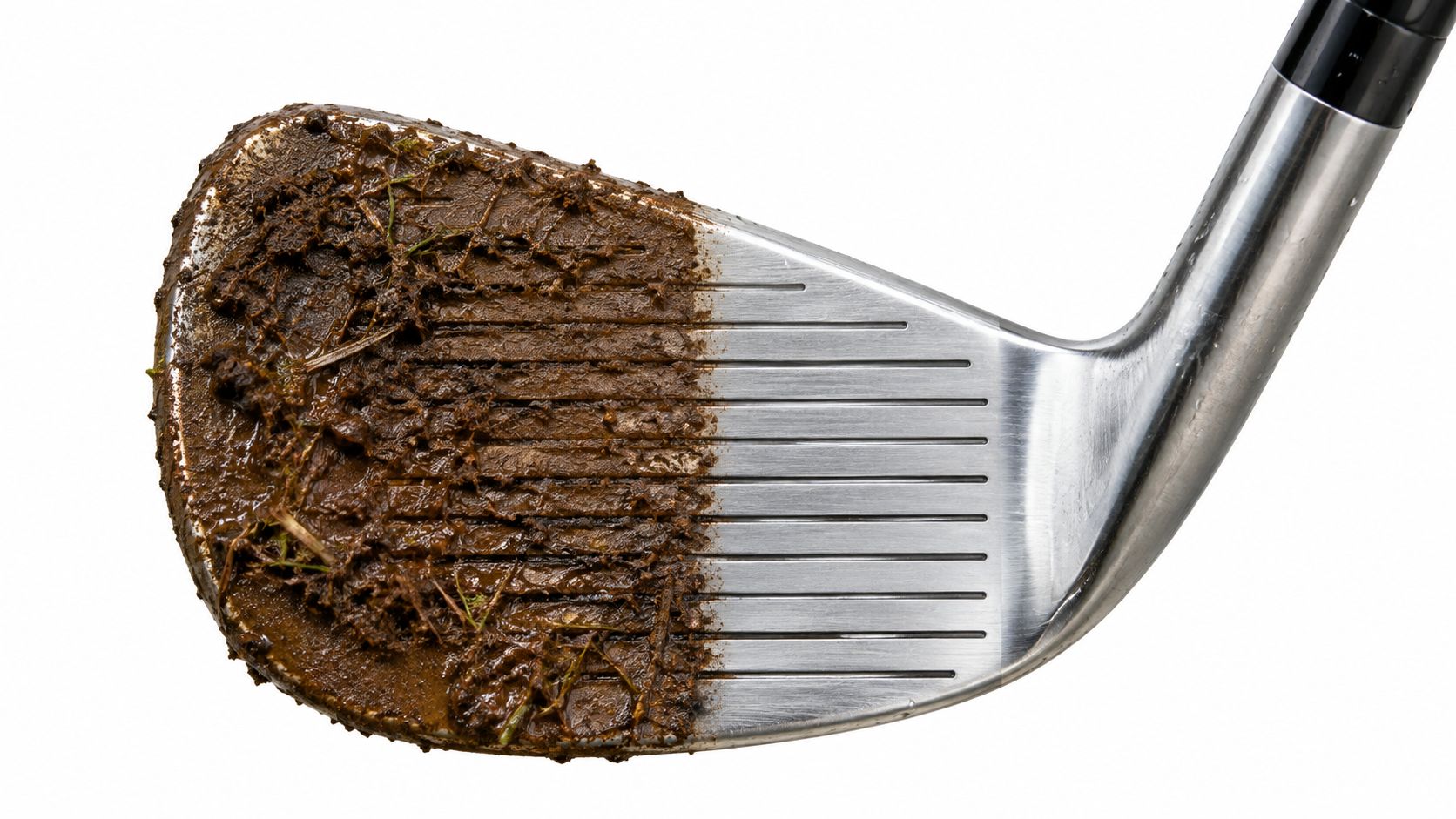
What a useful kit actually does
A stiff nylon groove brush lifts soil from the channels. A soft brush handles woods and painted surfaces without needlessly marking them. A microfibre towel removes moisture and loose grass, while a small biodegradable solution helps loosen stubborn residue without turning the bag into a mobile wash station.
Many cheap kits fail because they provide one overly aggressive brush and a thin towel. That arrangement might shift dry dust, but it struggles with wet parkland mud and encourages the golfer to scrub harder. Harder isn't better when the face, finish or groove edges are at risk.
Practical rule: Clean the club face while debris is still damp. Dried mud takes more force to remove and creates more opportunity for careless scraping.
A cleaning kit also belongs alongside wider equipment care. Golfers maintaining their own grips can use Fayrway's guide to regripping golf clubs at home, but cleaning remains the simpler habit with an immediate effect on every round.
Essential Items to Include in Your Bag
The best golf club cleaning kit is compact, manual and divided by surface. There's no need for a motorised gadget that needs charging when a well-designed brush and towel can do the work beside the fairway.
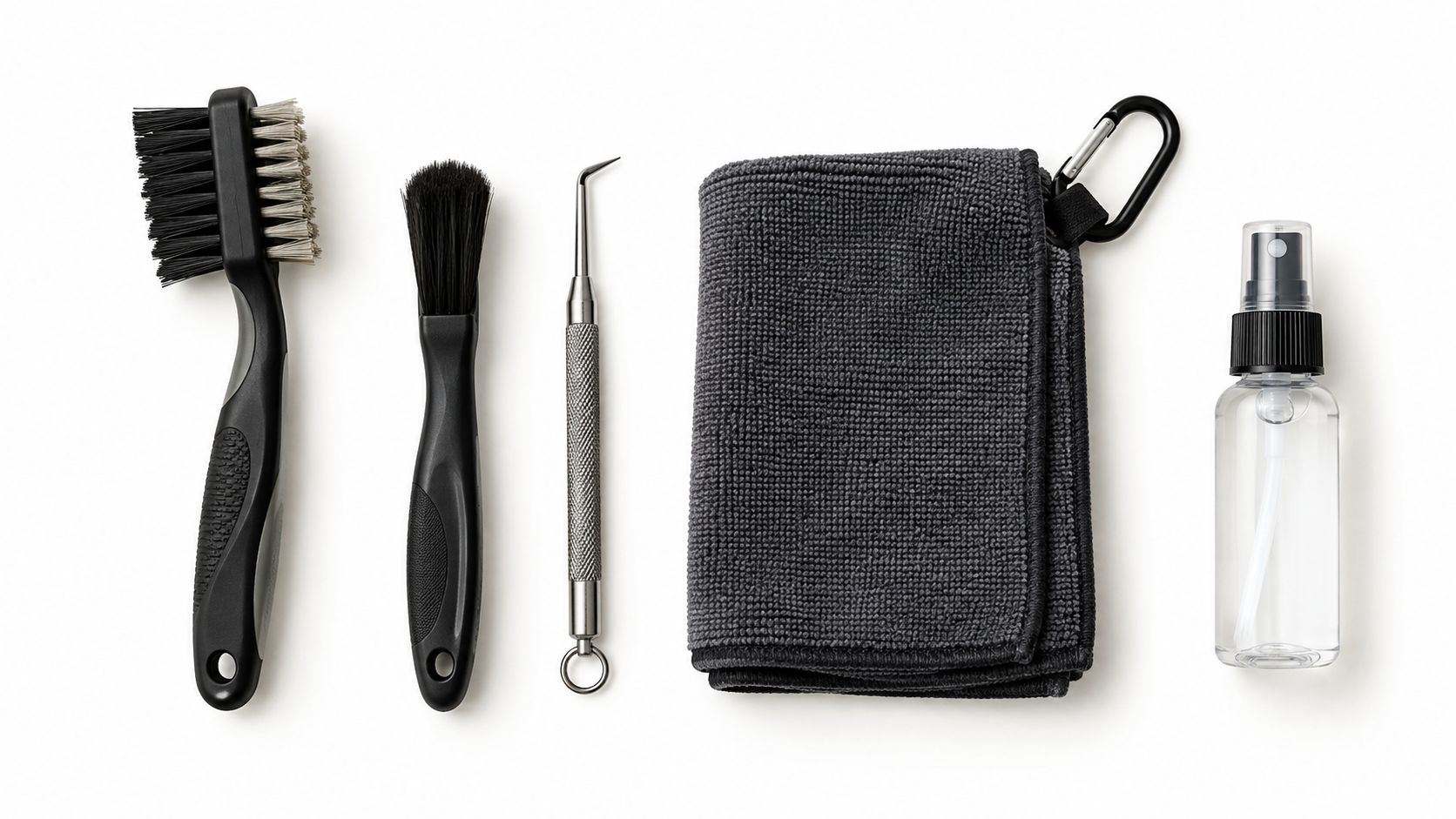
The brush matters more than the branding
Choose a stiff nylon brush for irons and wedges. It should reach into the grooves but flex enough to avoid aggressive damage to the face. The brush should be used with controlled strokes, not pressed into the metal as if it were removing paint.
A second, softer brush is worthwhile for drivers, fairway woods and hybrids. Painted crowns, composite panels and polished soles need a lighter touch. Using the same hard brush across every club is lazy maintenance and can leave marks where a damp cloth would have been enough.
A groove pick has a narrower job. It can lift compacted soil from an individual groove when bristles can't reach it, but it must never be used to widen, sharpen or reshape the groove. The R&A and USGA equipment rules distinguish conforming clubfaces from surfaces deliberately altered to create excessive spin, so a cleaning tool should remove debris only.
The towel and solution earn their space
A substantial microfibre towel should absorb water rather than spread it around the face. A carabiner or magnetic attachment keeps it available without requiring the golfer to open a bag pocket with muddy hands. Fayrway's magnetic golf towel is one example of the format, but the useful features matter more than the label.
Carry a small spray bottle containing a biodegradable, phosphate-free cleaning solution. It should loosen grass and mud without attacking finishes or leaving a slippery residue. The bottle doesn't need to flood the club. A targeted spray or dampened section of towel is normally enough.
A sensible bag setup looks like this:
- Stiff nylon brush: For iron and wedge grooves packed with soil.
- Soft bristle brush: For woods, painted heads and lighter surface dirt.
- Groove pick: For isolated compacted material, used only along the existing groove.
- Microfibre towel: For wiping mud and drying the face.
- Small spray bottle: For controlled moisture and low-water cleaning.
- Waste cloth or pouch: For keeping dirty tools away from gloves and clothing.
The kit should remain light enough to carry all round. If it takes longer to find the brush than to clean the club, the storage arrangement needs improving.
The Correct On-Course Cleaning Routine
The effective routine starts immediately after a dirty shot. Wet grass and mud lift more readily before they dry inside the grooves, so waiting until the end of the round creates unnecessary work and leaves the golfer playing several shots with a compromised face.
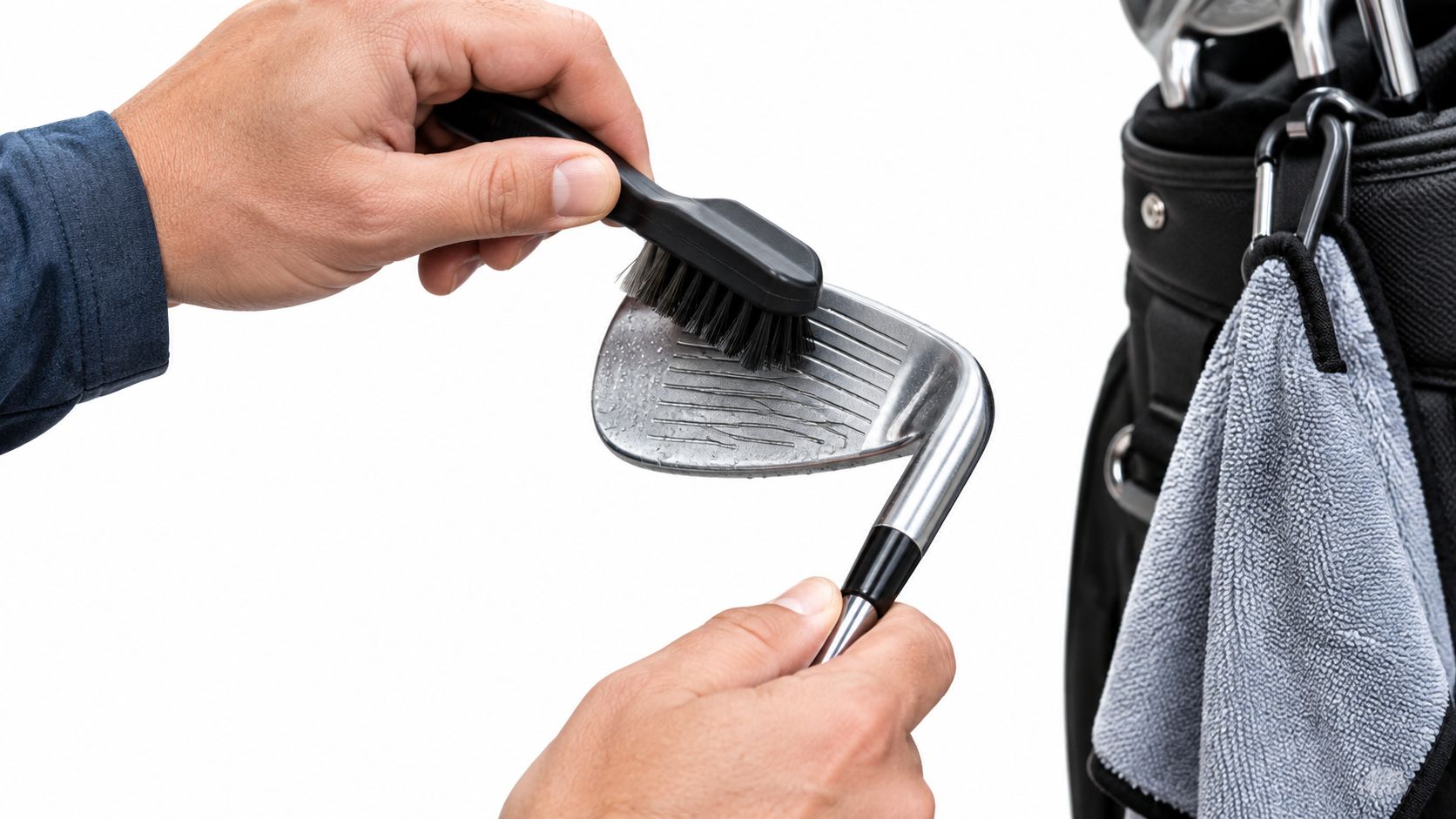
A four-part routine
- Remove the loose material. Tap the sole lightly or wipe away obvious clumps with the towel. Don't drag a large lump across the face, particularly if it contains sand.
- Dampen the face. Use a small amount of water or solution. A light spray is enough to soften residue, and it avoids soaking the hosel, ferrule, shaft or grip.
- Brush with the grooves. Work along the direction of the grooves, not randomly across them. UK golf cleaning guidance recommends wetting the face, brushing along the groove direction and drying the club afterwards.
- Dry before replacing the club. Use the clean part of the microfibre towel to remove moisture from the face and sole. The club should go back into the bag dry enough that water isn't sitting against metal or trapped in the divider.
Why the order makes a difference
The brush removes material the towel can't reach. The towel then removes the loosened dirt and stops the face remaining wet. Reversing those jobs, or using only a towel, leaves compacted mud in the grooves and transfers moisture around the bag.
A groove pick is for stubborn spots, not routine scraping. If a golfer needs to force it into the face every few holes, the brush or dampening step is probably being skipped. The cleaning should be quick enough to fit naturally into the normal post-shot routine, without delaying playing partners.
A clean face doesn't require a soaked club. Controlled moisture, the correct brush and a dry finish work better than carrying a large container of water.
Woods deserve restraint. Wipe the face and sole, use the softer brush if necessary, and avoid flooding the head. Grips should be wiped rather than sprayed during the round, because a wet grip is no improvement on a dirty one.
Deep Cleaning Your Clubs at Home
On-course cleaning protects the next shot. Home cleaning resets the set after a muddy round. The two jobs need different levels of water and different levels of patience, and confusing them creates avoidable damage.
| Task | On course | At home |
|---|---|---|
| Main aim | Restore the face before the next shot | Remove accumulated dirt across the set |
| Water use | Light spray or damp towel | Warm soapy water for clubheads |
| Main tool | Groove brush and towel | Brush, basin and clean drying cloth |
| Main risk | Leaving mud in grooves | Soaking shafts, grips or ferrules |
Clean the heads without soaking the club
Fill a basin with warm soapy water and place only the clubheads in it for a few minutes. Scrub the face, grooves and sole, rinse them, and dry them completely. That approach is consistent with UK guidance on cleaning golf clubs and keeps water away from the shaft, grip and ferrule.
The word “only” matters. Submerging the whole club can allow water into areas that aren't designed for prolonged immersion. It also makes it harder to check whether moisture has been trapped near the hosel or under a grip.
Use the stiff brush on irons and wedges, then switch to the soft brush or cloth for woods. Don't use a file, metal scraper or abrasive pad to make old grooves look sharper. Cleaning removes contamination, but it cannot restore groove edges that have physically worn down. A worn wedge may need professional assessment or replacement rather than increasingly aggressive treatment.
Grips need a separate routine
Grips collect sweat, sunscreen and dirt, which can make them feel slick. Wipe them with a damp cloth and a mild cleaning solution, then dry them fully before returning the clubs to the bag. Avoid leaving the set in a damp bag after cleaning, particularly during winter.
The bag itself deserves attention when the clubs come out. Empty loose mud from the dividers, allow the interior to dry and check that towel pockets aren't holding wet cloths. Fayrway's guide to storing golf clubs over winter covers the wider storage problem, including the importance of keeping equipment dry between rounds.
A complete set clean every few rounds is sensible, with more frequent attention during persistent wet weather. The face should still be brushed after dirty shots, because home maintenance cannot repair the performance lost during the round.
Common Mistakes and Environmental Considerations
Aggressive cleaning is not thorough cleaning. Wire brushes, harsh chemicals and forceful scraping can mark finishes or damage the condition of the face. Brass or steel bristles have no place in a routine that aims to preserve a conforming club, particularly when a nylon brush can remove the same wet soil with less risk.
Never treat a groove pick as a sharpening tool. The equipment rules allow a golfer to clean a club, not modify its geometry. If the grooves look rounded or the wedge no longer produces its expected flight, cleaning has reached its limit.
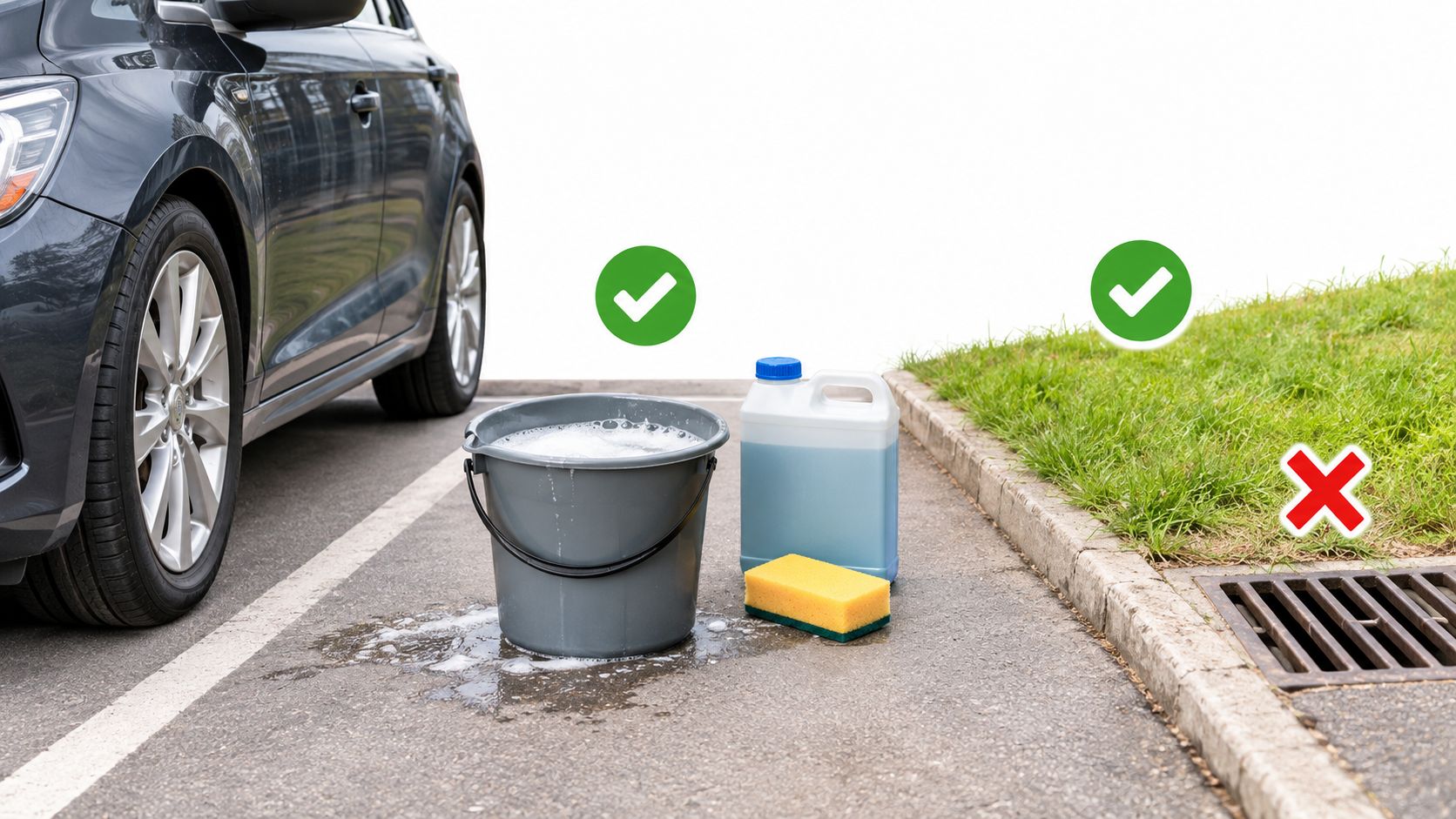
Use less water and control the runoff
A small club clean can create an environmental problem if dirty, soapy water is allowed to run into a drain or watercourse. UK environmental guidance recommends reducing water use with brushes and air hoses, using trigger-operated sprays with automatic shut-offs, selecting biodegradable phosphate-free detergents and keeping washings away from drains.
That advice suits ordinary golfers without pretending they face the same obligations as course operators. At home, clean over a permeable area where appropriate, use a controlled amount of water and collect or redirect dirty washings responsibly. Beside a club car park, avoid cleaning over a drainage grid or beside a stream.
A damp cloth and targeted brushing often outperform a bucket of dirty water. The cleanest routine is also usually the most convenient one.
Frequently asked questions
Can washing-up liquid be used on golf clubs?
A mild amount can be suitable for clubheads, provided it is diluted, rinsed away and followed by thorough drying. It shouldn't be used as a concentrated soak, and it must not be allowed to sit on grips, shafts or finishes.
How often should a golf club cleaning brush be replaced?
Replace it when the bristles become flattened, contaminated with hard grit or too soft to reach the grooves. A brush that no longer lifts debris encourages excessive pressure, which is a sign it has finished its useful life.
Is a pressure washer safe for a golf bag?
No. High-pressure water can force moisture into seams, zips, pockets and structural areas. Use a soft brush, damp cloth and controlled drying instead.
How can light surface rust be removed from an older wedge?
Start with a soft brush and a mild cleaning solution. Avoid aggressive abrasives or metal scraping, and stop if the finish begins to change. Deep corrosion or damaged grooves need professional assessment.
Can cleaning make grooves non-conforming?
Cleaning alone shouldn't alter the club. Sharpening, widening or reshaping grooves can affect conformity, so a groove tool should only remove lodged debris along the existing channel.
Does every club need the same cleaning method?
No. Irons and wedges tolerate firmer nylon brushing, while woods and painted heads need a softer brush or cloth. Graphite shafts, grips, ferrules and seals should be kept away from prolonged soaking.
Fayrway curates golf accessories, bags, clubs and practical course equipment with suitability in mind, including tools that help golfers look after their gear in British conditions. Visit Fayrway to choose a compact cleaning setup that fits the bag and the way the golfer plays.


