
buying guides
Driver Golf Set Guide: How to Choose Your Perfect Tee Shot
Sandy Grewal · 8 October 2026
Table of Contents

10,213,894 scores were recorded in England in 2024, up 8.63% from the previous season. The best driver golf set isn't a single specification, it's a match between head forgiveness, loft, shaft stiffness, strike quality and the British conditions the golfer faces.
A golfer standing on the first tee on a damp Saturday morning doesn't need the longest launch-monitor number. They need a tee shot that carries far enough, stays playable in the wind and doesn't turn a small miss into a lost ball. That's why the right driver golf set depends on how often the golfer plays, where they play and what their normal strike pattern looks like.
What makes a driver golf set actually work for you
The wrong driver usually feels impressive indoors and awkward on the course. It produces one excellent drive, then punishes the next three because its loft, shaft or head shape demands a level of precision the golfer doesn't regularly deliver.
A useful driver golf set creates repeatable distance. That means a sensible launch, manageable spin, predictable curvature and a shaft that helps the golfer return the face consistently. The single longest drive matters far less than the average shot and the damage caused by the worst one.
Start with the golfer, not the catalogue
A proper selection begins with four questions:
- How often does the golfer play? Occasional golfers often need ease of use more than adjustability or tour-style workability.
- Where does contact happen? Heel, toe and low-face strikes each create different launch and curvature problems.
- What is the usual miss? A slice, a pull or a low strike points towards different head and shaft priorities.
- What are the home courses like? Exposed links, sheltered parkland and soft winter fairways place different demands on a driver.
A golfer with a moderate swing and inconsistent contact will usually gain more from a stable head and usable loft than from a low-spin head designed for centred strikes. A stronger player who hits the centre regularly may need tighter control of spin and face angle instead.
Practical rule: the right driver is the one that produces a trustworthy average shot, not the one that wins a single launch-monitor test.
The Fayrway drivers collection should be approached with that question in mind. Product labels can narrow the choice, but they can't replace a look at strike location, ball flight and course conditions.
England's participation figures underline why this fit-first approach matters. England Golf recorded 10,213,894 scores during 2024, which was 8.63% higher than the previous season, according to England Golf statistics reported by National Club Golfer. More rounds mean more real tee shots, and every one exposes whether a setup is genuinely playable.
Why forgiveness often beats pure distance
You hit the first tee after weeks away, the wind is across the fairway and the strike catches the heel. A fast driver that only performs from the centre leaves you with a poor angle for the second shot. A forgiving head keeps more of that drive in play.
Forgiveness means maintaining useful performance when contact moves away from the centre. A higher-MOI head resists twisting, while suitable loft helps preserve launch on a low strike or a slower swing. That matters on damp British fairways, where a slightly shorter drive from the short grass is often more useful than extra distance followed by a recovery shot.
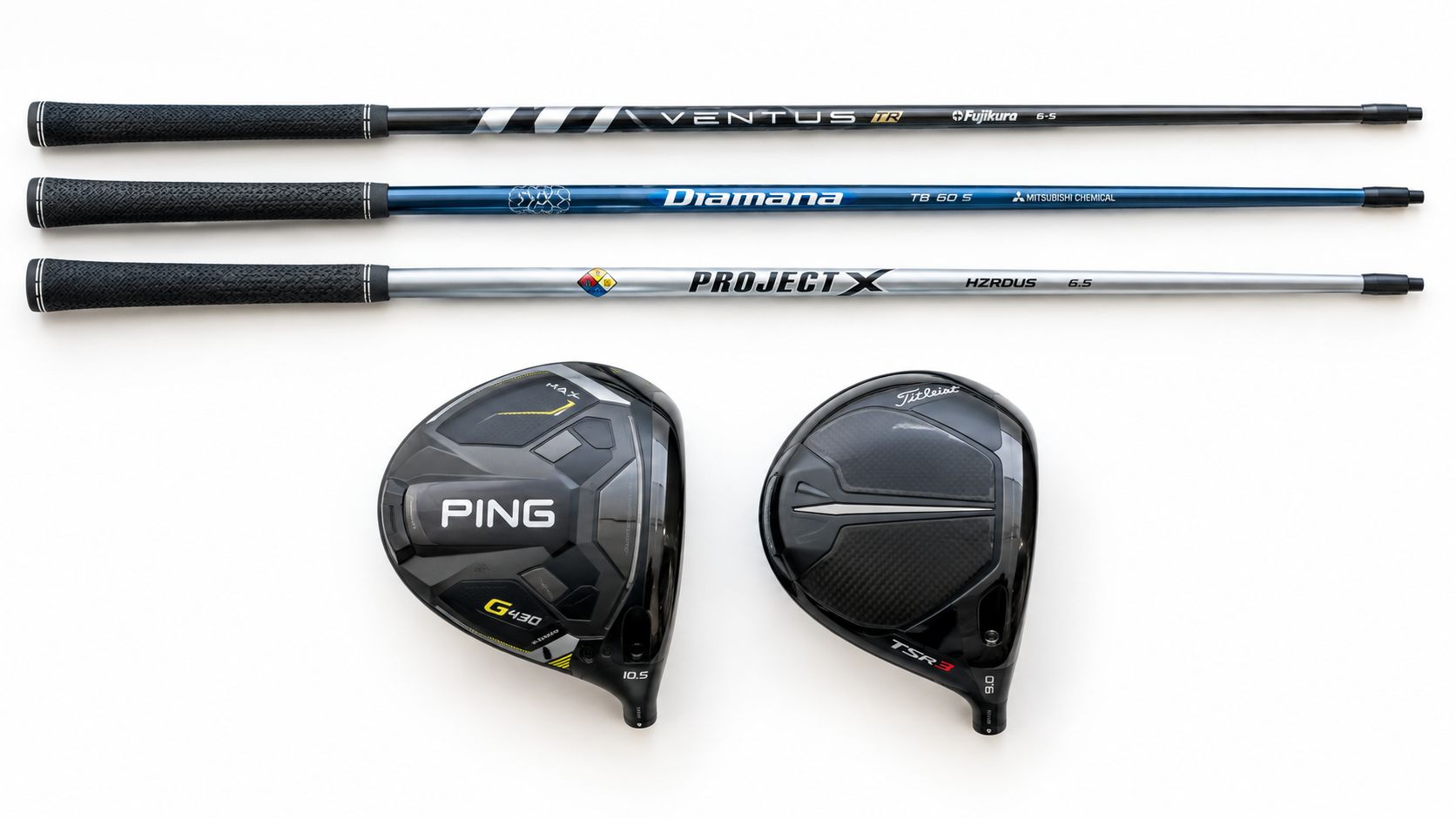
Measure the shots that count
Judge a driver by a normal group of shots, not the longest carry on a launch monitor. Record:
- Average carry, because repeatable distance beats an isolated maximum.
- Dispersion width, because fairway position affects the next shot.
- Strike location, because repeated heel or low-face contact points to a fitting problem.
- Worst-case result, because one severe miss can erase several good drives.
A lower-spin players head can look excellent on centred strikes. A higher-MOI head with appropriate loft and a shaft that returns the face consistently tends to produce more usable distance for casual golfers on damp fairways. It also gives nine-hole and short-format golfers a better chance of making a playable opening tee shot after time away from the course.
A slightly shorter playing length can be sensible. You may give up some theoretical clubhead speed, but centred contact can raise average ball speed and tighten dispersion. On a windy links or a soft winter course, that trade usually pays off.
Forgiveness must still suit the miss
A draw-biased head can help a golfer who regularly leaves the face open, but it will not fix every swing problem. A golfer who hooks the ball should not choose extra left bias just because the head is marketed as forgiving.
The right driver makes the common miss less damaging without creating a new one. Test the club against the shot you really play, including strikes from the heel, toe and low face, rather than selecting it from one perfect swing.
Use the Fayrway drivers collection as a starting point, not a verdict. Product labels narrow the options, but strike location, ball flight and course conditions decide whether the driver earns a place in your bag.
How loft, head design and shaft choice shape your tee shots
Loft, head design and shaft profile decide whether a driver golf set helps or fights your swing. They work as a package. Change one without checking the others and a promising club can become difficult to launch, control or repeat.
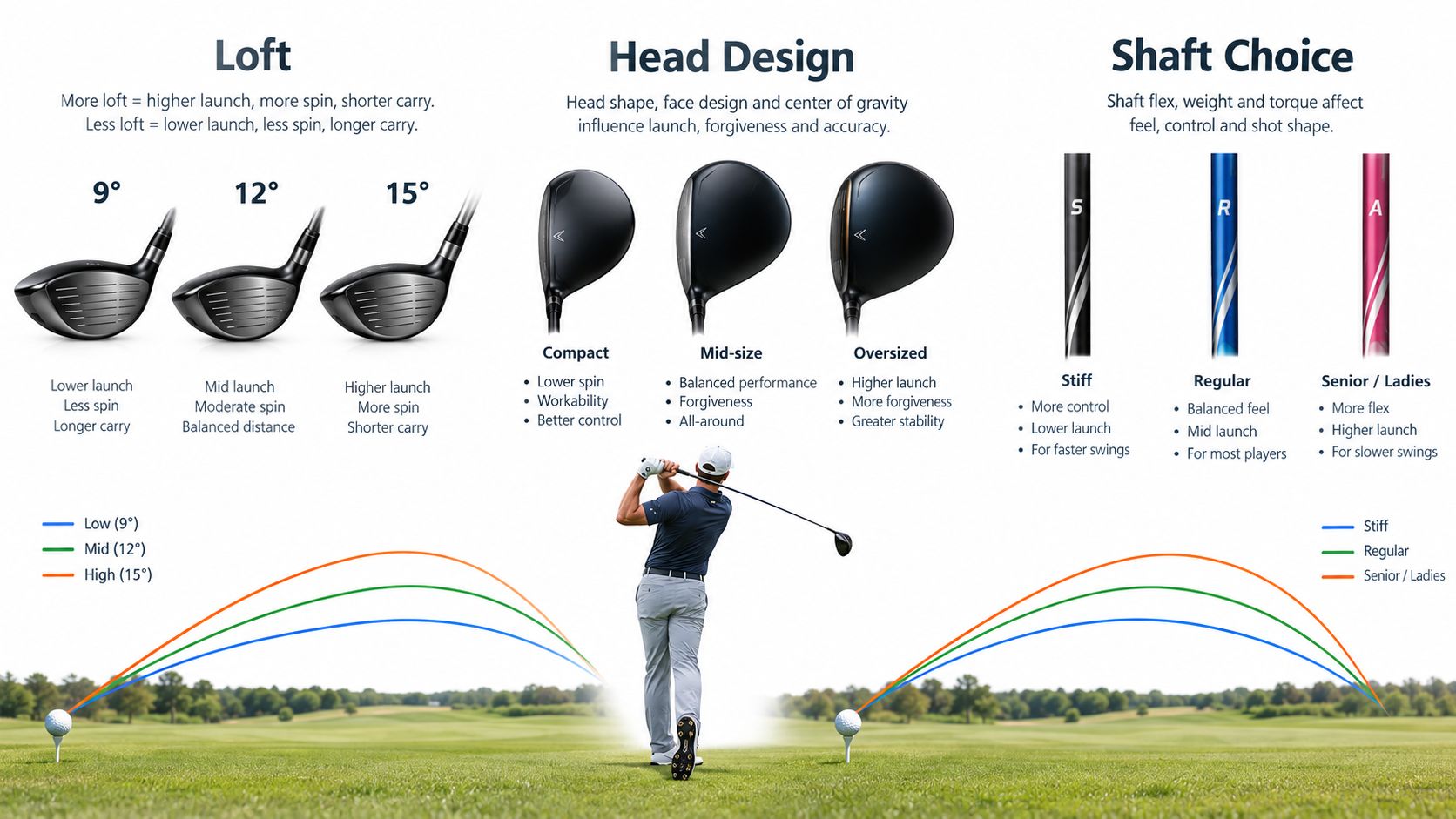
Loft sets the launch window
More loft usually sends the ball higher and keeps it in the air longer. That matters for slower swings, low-face strikes and British rounds where a high, usable flight is more valuable than a theoretical maximum on a dry launch monitor.
Use these ranges as a sensible starting point: 11 to 12 degrees for a slow swing, around 10 to 11 degrees for a moderate swing, and 9 to 10 degrees for a fast swing that already produces enough launch and spin. Test the result rather than buying the lowest number available.
A player delivering the club slowly with a low strike will usually get more usable carry from 11 to 12 degrees and rear weighting than from a 9-degree low-spin head. Less loft suits a golfer who creates plenty of launch, but it is a poor default for anyone already hitting low drives.
An adjustable hosel can fine-tune loft and face presentation. It cannot cure a shaft that is too long, an unsuitable lie or a head that conflicts with the strike pattern.
Head design changes ball flight
Rear-placed weight increases the head's resistance to twisting, helping preserve direction when impact moves towards the heel or toe. It also tends to raise launch. Heel weighting can help a player whose face remains open at impact, while a neutral head suits someone who already starts the ball left or right consistently.
Choose the head for your actual miss, not one flushed shot. A damp parkland fairway or exposed links demands a flight you can keep in play, especially when the wind turns a small curvature into a lost ball.
Shaft choice controls delivery
Flex labels are only a starting point. A shaft that is too stiff can prevent a golfer from loading and returning the club comfortably, while one that is too soft can make face delivery unpredictable. Weight, length and feel influence tempo as well.
Read this guide to whether a stiff or regular flex shaft is right before choosing from the label alone. Judge the shaft by launch, dispersion and contact, then select the option that supports your natural rhythm rather than forcing a harder swing.
Full set, half set or driver only
A full driver golf set sounds like the obvious starting point, but it isn't always the sensible one. New golfers often buy more clubs than they can use, then carry the extra weight while still reaching for the same few reliable options.
The three sensible routes
| Setup | Suits | Main advantage | Main drawback |
|---|---|---|---|
| Driver-led build | A golfer replacing one weak club | Focused spending and a clear performance goal | Leaves gaps elsewhere in the bag |
| Half set | Casual or returning golfers | Less weight, lower decision fatigue and easier transport | Fewer options around the course |
| Full set | Regular 18-hole golfers | Consistent gapping and broader shot coverage | Higher cost and more clubs to learn |
A driver-led build makes sense when the rest of the bag is serviceable and tee shots are the clear weakness. The golfer should still check whether a hybrid or fairway wood would produce a more reliable result before spending heavily on a driver.
A half set is often the lowest-regret choice for someone who plays intermittently, has limited storage or isn't yet sure how seriously golf will fit into weekly life. Fewer clubs make it easier to learn distances and choose a shot without standing over the ball debating half the bag.
When the driver isn't the first purchase
Beginners can gain immediate confidence from a higher-lofted fairway wood or hybrid. Those clubs are shorter than a driver and can be easier to control, particularly from the tee on shorter holes or from a fairway lie.
A full set becomes more logical when the golfer regularly plays longer rounds and needs dependable yardage gaps. It also makes sense when existing clubs are mismatched, worn or built with shafts that make consistent contact difficult.
Buying every club at once doesn't make a new golfer ready for every shot. It often gives them more decisions before they've learned the basics.
The sensible order is to choose clubs that cover the golfer's actual playing habits, then add options as a real gap appears. A driver should earn its place through useful tee shots, not through the number printed on its head.
Choosing a driver for British conditions
A driver tested in warm, still conditions can behave very differently on a cold, wet UK morning. Cold air, wind and soft fairways change how much of the shot comes from carry and how much comes from rollout.
On links courses, a lower flight may help the golfer manage wind, but excessive low launch can leave too little carry into a breeze. On parkland courses, a stable higher flight may be more useful when wet ground removes rollout and rough punishes offline drives.
Carry matters more than the headline number
Total distance often flatters a driver during dry conditions. British golfers should pay closer attention to carry distance, launch stability and dispersion. A drive that flies consistently and finishes in a playable area is more valuable than one that occasionally runs further but produces a difficult second shot.
The UK market analysis identifies colder and wetter months as a significant factor affecting golf participation and equipment sales, as noted in the Sporting Insights golf market analysis. Seasonal conditions therefore belong in equipment decisions, not just weather forecasts.
Test for the home course
A useful test should include the golfer's normal strike, not a string of artificially perfect swings. It should also compare how the driver performs when the golfer swings smoothly, when the strike moves low on the face and when the ball starts slightly offline.
For links golfers, what defines a links course and other golf course types provides useful context for understanding why course design changes club selection. A driver that works on a sheltered parkland course may not be the best option on an exposed coastal layout.
Storage matters too. Wet grips should be dried, headcovers should not trap damp and clubs should be checked after travelling. A well-chosen driver still needs basic care if it's expected to perform through a long British winter.
Frequently asked questions
Is a longer driver always better?
No. A longer shaft may offer more speed for a centred strike, but it can also make centre-face contact harder. A shorter setup that improves average strike quality often produces more useful carry and tighter dispersion.
How can a golfer tell whether the shaft is right?
The shaft is a good candidate when the golfer can return the face consistently without forcing the swing. Launch, curvature, strike location and dispersion should be assessed together. A flex label alone doesn't provide enough information.
Can an adjustable hosel fix a mismatched driver?
It can fine-tune loft and face presentation, but it can't correct every problem. An unsuitable shaft length, head design or lie may continue to cause poor contact even after adjustment.
What loft suits most UK amateurs?
There isn't one universal loft. Golfers who struggle to launch the ball or play in soft conditions often need enough loft to create reliable carry. Golfers who already launch high and generate excessive spin may need a different starting point.
Is a driver golf set worthwhile for a casual golfer?
Sometimes, but not automatically. A half set or driver-led build can be better value when the golfer plays infrequently, has limited storage or is still learning which clubs they trust. Regular 18-hole players may benefit from the coverage of a fuller set.
How should a driver be stored through a damp winter?
Dry the grip and head after play, keep the headcover clean and dry, and avoid leaving damp equipment sealed in a bag for long periods. Before the next round, check the grip, head and adjustable settings for signs of moisture or movement.
Fayrway offers a focused range of golf equipment with suitability guidance for different golfers and playing conditions. Visit Fayrway to review curated driver, hybrid, fairway wood and package-set options before choosing the clubs that belong in the bag.


