
breathable fabric
The Men's Polo Shirt Fit Guide: Golf Style and Care
Sandy Grewal · 24 September 2026

A men's polo shirt for golf works best when it balances breathability, stretch, UV protection, and smart-casual shape, and the fit matters as much as the fabric. For the UK market, the category sits at about £0.8 billion to £1.2 billion in annual retail sales and roughly 40 million to 50 million units a year, so there's plenty of choice, but not every shirt suits a wet tee box or a strict clubhouse dress code (IndexBox).
You know the scene. The car park's damp, the first fairway is holding last night's rain, and your shirt needs to cope with a backswing, a bit of drizzle, and lunch in the clubhouse without looking like you've just rolled out of the gym. That's why a golf polo has to do more than look tidy, it has to move cleanly, breathe properly, and keep its shape when the round gets messy.
Table of Contents
- Why Golf Polos Are Different From Everyday Polos
- How to Find the Perfect Fit for Your Body Type
- Understanding Performance Fabrics for Golf
- Fabric Comparison Guide for Every Golfer
- Styling Your Golf Polo for the Course and Clubhouse
- Caring for Your Golf Polo to Maintain Performance
Why Golf Polos Are Different From Everyday Polos
A casual polo can look fine in the mirror and still be wrong for golf. On a British course, you're dealing with wet grass, changing temperatures, and a swing that asks more from the shoulders and torso than a normal day in town. A shirt that's cut for lounging can pull across the chest, ride up at address, or hang so loosely that it catches wind on the follow-through.
What the course asks of a shirt
Golf wear has to work through repeated motion, not just short walks and seated comfort. Cotton piqué is often used because its texture gives structure and helps the collar stay neater, while smoother jersey fabrics feel softer but read more casual. British menswear guidance also points out that stretch or elastane blends help active movement, which matters when you're reaching for a driver on the 18th tee after a full round (Esquire UK).
That difference shows up in real life. A shirt that suits a pub garden may feel clumsy when you're bending, twisting, and then pulling a mid-round layer on and off. A golf polo needs to sit close enough to look deliberate, but not so close that it fights the swing.
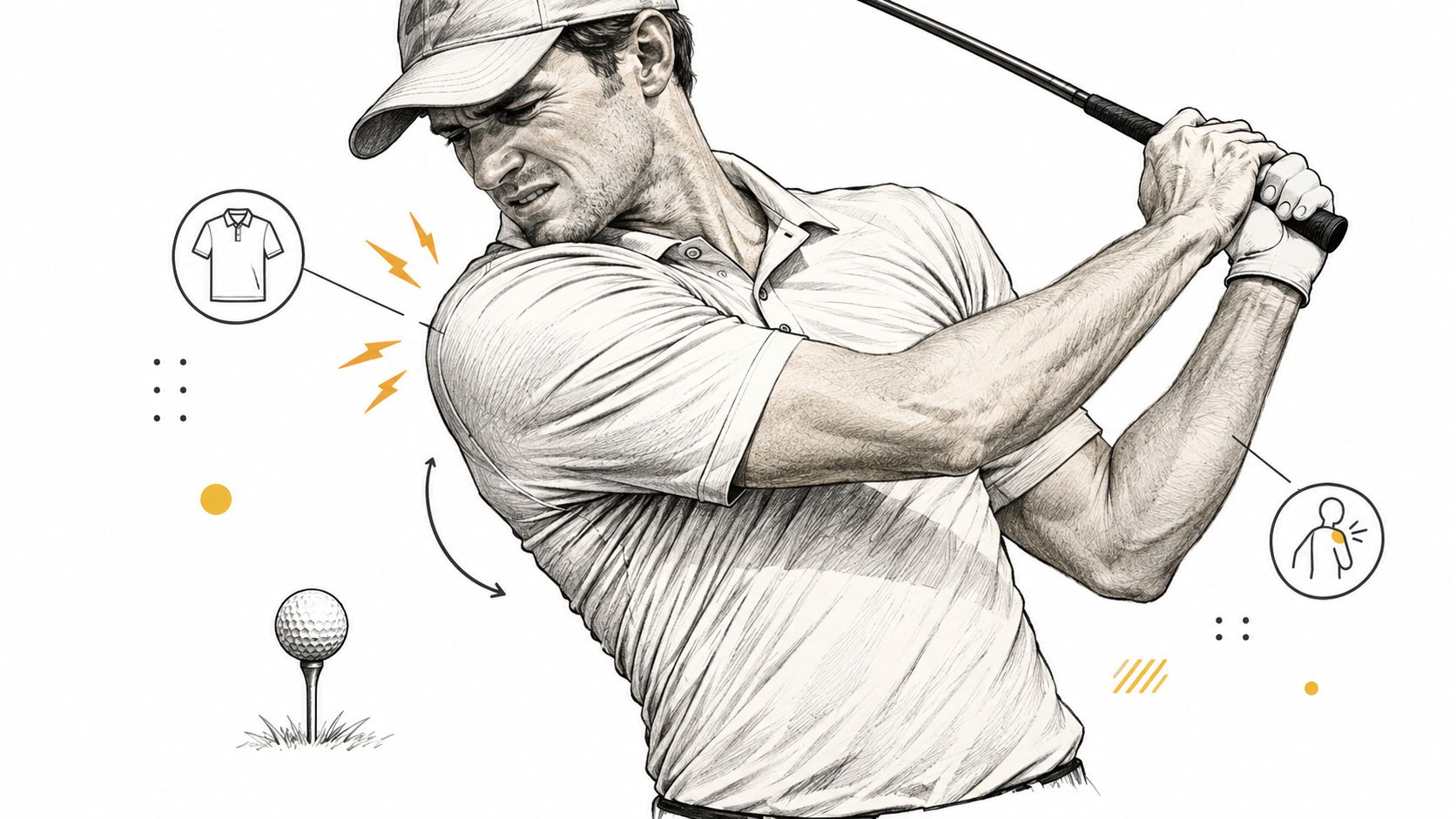
The simplest rule is this. Everyday polos are judged mainly by appearance, golf polos are judged by whether they stay comfortable and presentable from first tee to clubhouse. If you want a practical starting point, look at a focused range such as Fayrway's apparel polos, because a golf-specific collection usually filters out the worst compromises.
Practical rule: if the collar collapses before you've finished warming up, the shirt is too casual for golf.
How to Find the Perfect Fit for Your Body Type
Fit decides whether a polo looks sharp or feels borrowed. A good shirt should let you make a full turn without strain, but it shouldn't billow at the waist or bunch under a sweater. The trick is to measure your body, then check the garment, not guess from the hanger.
Measure the parts that actually matter
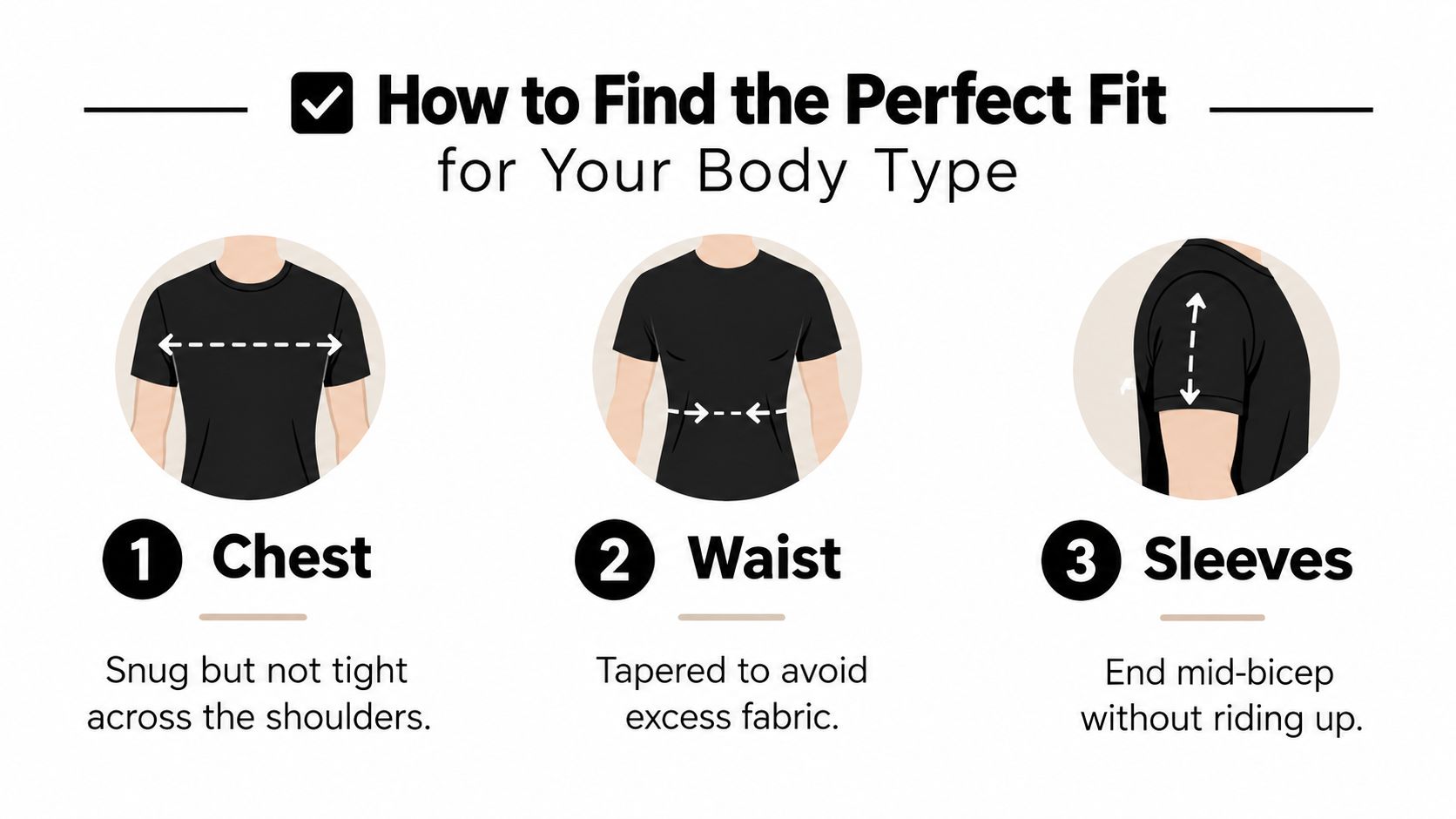
Start with the chest, keeping the tape level and snug but not tight. Then measure the waist at the narrowest point you'll wear the shirt across, especially if you tuck in on club days. Sleeve length matters too, because sleeves that creep down toward the elbow tend to look oversized and can interfere with a clean address position. A useful size reference is the Fayrway size guide, which helps translate those measurements into something usable before you buy.
Check the shirt on three points
The shoulder seam should sit at the edge of your shoulder, not spill onto the upper arm. The torso should skim your body without pinching, especially if you play in colder weather and add a layer. The hem needs enough length to tuck cleanly when the dress code asks for it, but not so much that it balloons untucked.
Keep one dressing-room move in mind, raise both arms as if you're setting the club at the top of the backswing. If the shirt climbs too far or pulls across the chest, it's the wrong cut.
For a practical comparison, a polo that feels secure during a shoulder turn will also sit better under a jumper, and that matters on windy UK days. If you're choosing between relaxed comfort and tidy structure, remember that the course usually rewards the second.
You can also judge the glove-and-shirt pairing by feel. A product like the Cabretta Leather Golf Glove Abstract Art for Men & Women uses 100% AAA Cabretta leather for flexibility and tactile control, which is the same sort of standard you should expect from a polo fit, enough freedom to work, enough structure to stay composed.
Understanding Performance Fabrics for Golf
Fabric is where golf polos either earn their place or let you down. UK golfers need shirts that handle sweat on a warm front nine, dry reasonably fast after a shower, and keep the collar from looking flattened by the time you reach the 15th. The UK market is still heavily import-led, with over 90% of volume imported, mainly from Asia and Turkey, so fabric choice matters because supply is broad and quality varies widely (IndexBox).
Cotton piqué, jersey, and blends
Cotton piqué remains the classic golf choice because its textured knit helps with breathability and gives the collar more shape. Jersey is softer and smoother, so it can feel comfortable on the skin, but it usually looks more casual and is less convincing when you need a tidy clubhouse look. Stretch or elastane blends improve movement, which is why they make sense for rounds where you're swinging repeatedly in damp air or wearing the shirt under a mid-layer (Esquire UK).
What to expect from sustainable fabrics
There's also a real trade-off between lower-impact materials and on-course performance. UK-focused sustainable polo listings show common weights around 170 to 230 g/m² and certifications like OCS and GRS used to verify claims, which is useful when a buyer wants more than vague green language (Social Supermarket). Heavier organic cotton styles tend to feel more structured, while recycled-polyester or cotton-recycled blends can be a better fit if you want quicker drying and less creasing during a long round.
The best fabric depends on the round, not the marketing label. A shirt that feels luxurious in the pro shop can still be the wrong choice if it traps sweat or sags after nine holes.
A smart way to think about it is this. If you play mostly in cooler weather and want a shirt that keeps its shape at lunch, favour structure. If your priority is movement, recovery, and easier drying, lean towards a performance blend.
Fabric Comparison Guide for Every Golfer
Choosing between fabrics is easier when you compare the trade-offs directly. The table below keeps the focus on golf, not general fashion, because the right shirt for a practice range session isn't always the right shirt for a wet medal round.
| Fabric Type | Breathability | Moisture Wicking | Stretch | UV Protection | Best For |
|---|---|---|---|---|---|
| Cotton piqué | Good | Limited | Low unless blended | Limited unless treated | Clubhouse-friendly rounds, tidier collars |
| Jersey cotton | Moderate | Limited | Moderate | Limited unless treated | Casual practice rounds, softer feel |
| Recycled polyester blend | Good to very good | Strong | Strong | Often better when engineered into the fabric | Warm days, quicker drying, active golf |
| Cotton-recycled blend | Good | Moderate to strong | Moderate | Depends on treatment | Balanced wear, repeated washing, mixed weather |
| Organic cotton | Good | Limited | Low to moderate | Limited unless treated | Structure and feel, especially for slower rounds |
One useful way to read the table is by use case. If you want the shirt to stay presentable after a damp walk from the car park, a cotton-piqué option holds up well. If you expect sweat, showers, or a longer round, a recycled-polyester blend usually performs better because it handles drying and movement more efficiently.
A sustainable choice isn't automatically the most practical golf choice. The better question is whether the fabric keeps you cool, lets you swing properly, and still looks right when you walk into the bar after the 18th. That's why the best shirt often comes from matching the fabric to the round, not the other way round.
Best Golf Polos 2026 is a useful place to compare current options if you want to narrow the field without sifting through a full shop rack.
Styling Your Golf Polo for the Course and Clubhouse
A polo can be technically right and still look wrong if the rest of the outfit fights it. UK golf culture tends to reward neatness, especially at clubs where the restaurant, practice ground, and first tee all share the same dress standards. The aim is simple, look tidy enough for the clubhouse, but comfortable enough for a full round in changeable weather.
Match the shirt to the setting
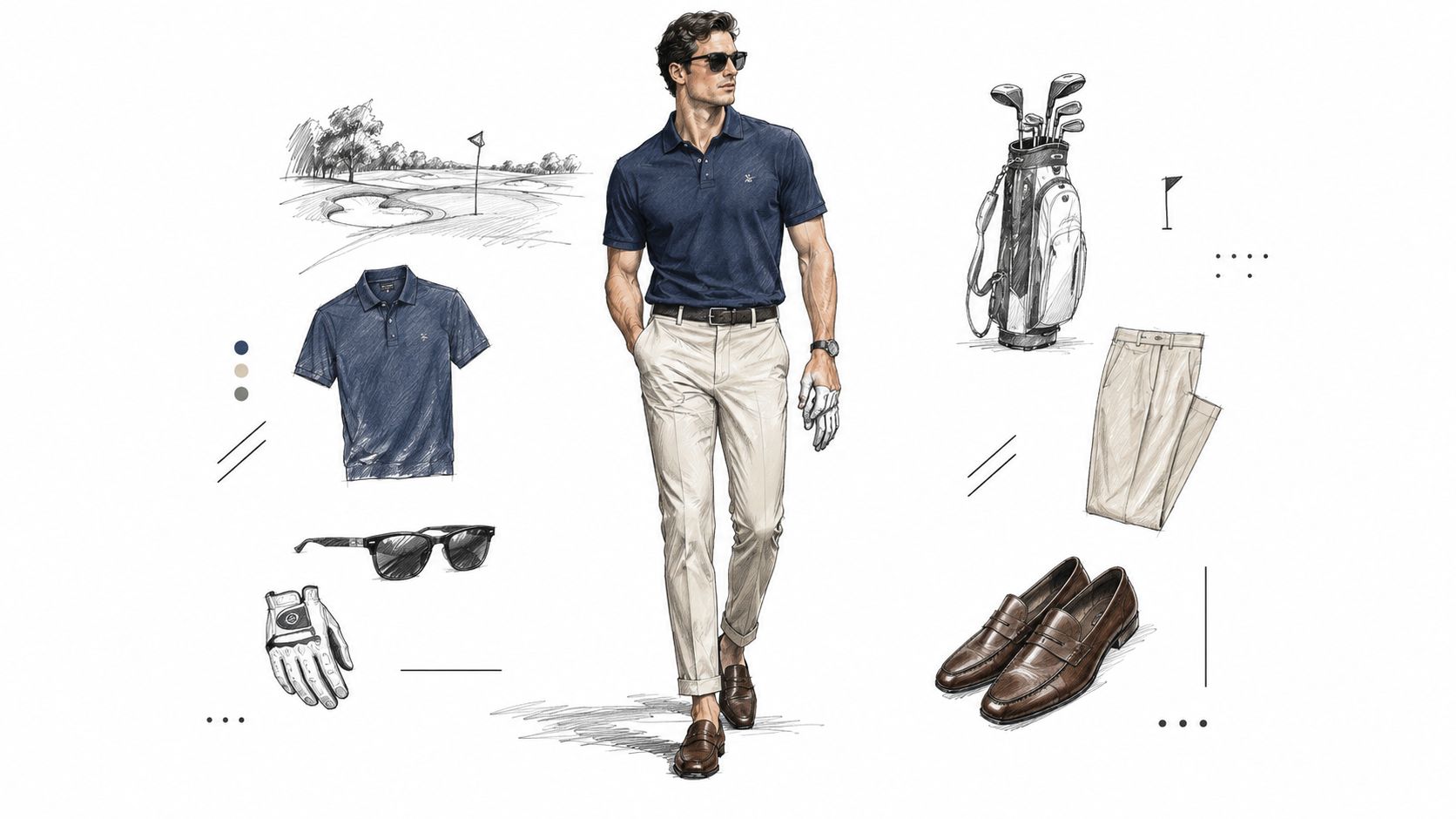
For a club competition, tuck the polo into fitted golf trousers or smart shorts if the dress code allows them. For practice rounds or a relaxed nine holes with friends, an untucked shirt can work if the hem sits cleanly and the cut isn't too long. Navy, white, grey, and deep green are the safest colours because they work with most trousers and don't look flashy in overcast light.
A lighter shirt can help on sunny days, but strong sun in the UK still shows sweat marks quickly if the fabric is thin. That makes collar structure, opacity, and fit more important than chasing a statement colour. Shoes should stay clean and simple, because an otherwise good outfit can look careless if the footwear is scuffed.
Layer for British weather without losing shape
A quarter-zip over a polo is the standard answer when the wind picks up. Make sure the collar lies flat beneath the layer, and avoid anything so bulky that it distorts the shoulder line. If you're heading straight from the 18th green into the clubhouse, the shirt should still look purposeful once the outer layer comes off.
The embedded video below gives a useful visual reference for how the shirt sits with golf styling choices.
A final detail matters here, the shirt should move with the rest of your kit. If the collar flops, the sleeves twist, or the hem creates bulk at the waist, the whole outfit starts to look untidy. Smart styling in golf isn't about dressing up, it's about removing distractions.
Caring for Your Golf Polo to Maintain Performance
Good care keeps a polo looking sharp and working properly. Performance fabrics lose their edge when they're overheated, over-softened, or left scrunched in a bag after a wet round. On a UK course, mud, rain, and grass stains are normal, so the care routine has to be practical rather than fussy.
Wash and dry with the fabric in mind
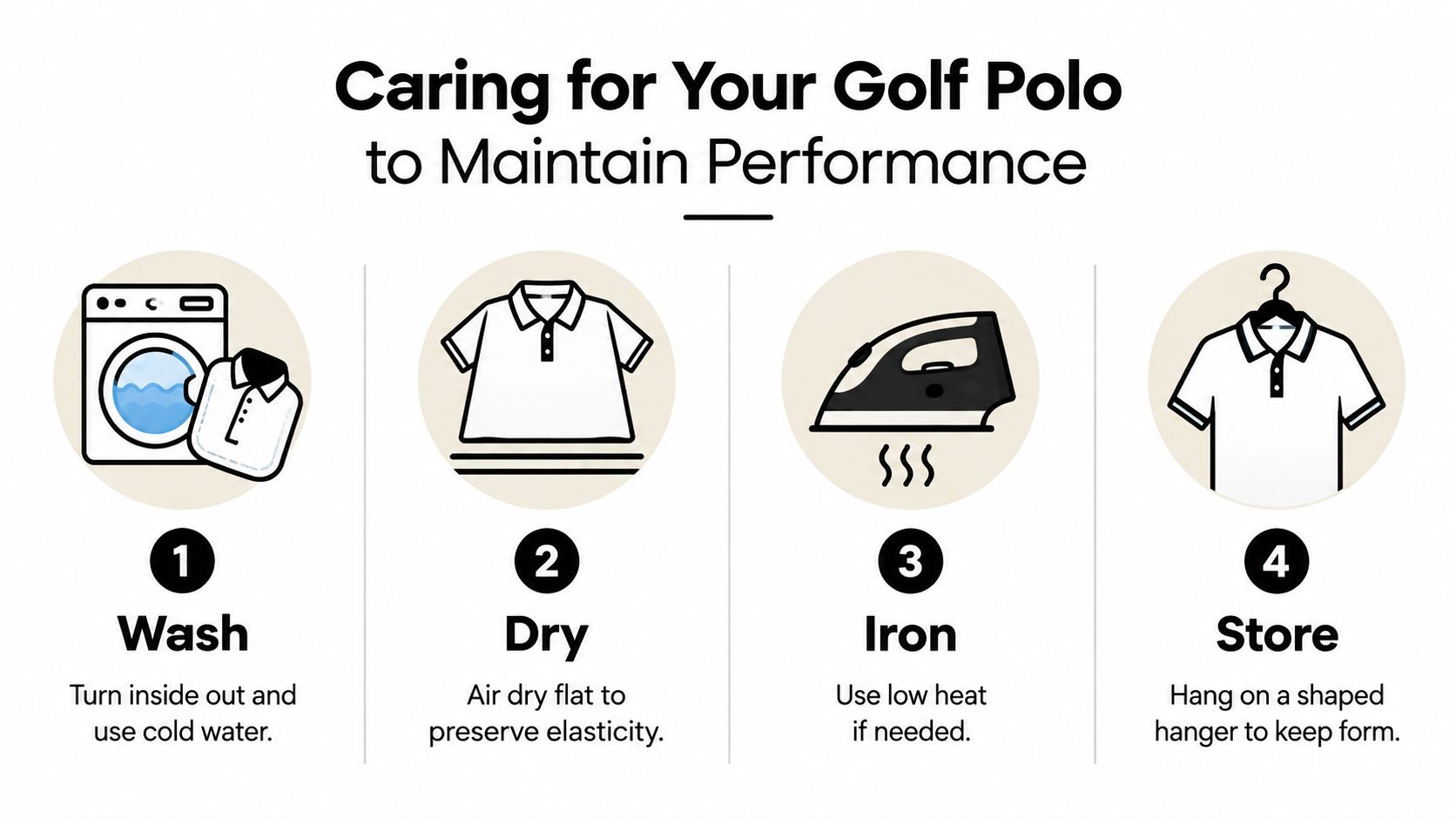
Turn the shirt inside out before washing so the outer face takes less abrasion. Use cold water where possible, especially on blended fabrics, and avoid fabric softener on moisture-wicking materials because it can leave a coating that reduces performance. Air drying is safer than aggressive tumble drying, since heat can affect elasticity and shorten the life of the fit.
Handle stains early
Grass and mud are easiest to remove before they set. Rinse the marked area as soon as you can, then wash the shirt rather than letting it sit in a kit bag overnight. If the collar has picked up sweat or sunscreen, treat it gently and avoid high heat, because that's where colours and shape tend to suffer first.
Store it so it keeps its shape
Hang the shirt on a shaped hanger once it's fully dry, or fold it neatly if your wardrobe space is tight. Don't put it away damp, because that traps odour and can leave the fabric creased in the wrong places. If you need to iron it, use low heat and keep it light, especially on blends that already hold their shape well.
Clean care isn't about making the shirt perfect, it's about making sure the next round starts with a collar that sits right and fabric that still feels responsive.
A small amount of attention after each round pays off more than repeated emergency fixes before tee time. If your polos need replacing or you want to compare golf-ready options with proper guidance, visit Fayrway and look through the apparel range with your course conditions in mind.


