
Buying Guides
Golf Hand Warmers: Types, Use on Course, and Buying Tips
Sandy Grewal · 15 October 2026
Table of Contents
- What Golf Hand Warmers Actually Do in a British Winter
- Why Cold Hands Cost You Shots
- The Three Types and Where Each One Fits
- How Disposable and Reusable Warmers Actually Work
- Battery, Runtime and Charging in Real Conditions
- Where to Put a Hand Warmer During the Round
- When a Hand Warmer Will Not Save Your Round
- Buying, Disposing and the Answers You Still Have
- Frequently asked questions

If the first tee is cold, windy and damp, golf hand warmers can keep fingers comfortable between shots, but they won't rescue a soaked glove or make an unplayable course playable. For most UK golfers, they're a useful winter backup, not essential golf equipment.
What Golf Hand Warmers Actually Do in a British Winter
A hand warmer solves one narrow problem: cold hands between shots. It can help fingers recover warmth, reduce the temptation to grip the club harder than necessary and make the walk between holes more comfortable. It can't replace proper winter gloves, keep rain off the grip or guarantee better scores.
That distinction matters in Britain. Winter golf often means low temperatures alongside wind, rain, frost, reduced daylight and temporary greens. A warmer has genuine value on a cold, dry round where the course is open and the main irritation is that fingers lose feel while waiting to play.
UK participation data shows that winter golf remains a real part of the calendar, even though it is quieter than summer. Commercial courses across England, Wales and Scotland averaged 1,385 rounds per course in the first quarter of 2024, a 14% fall from Q1 2023, according to Sporting Insights data reported by Golf Business News. The same report says summer volumes are typically two to three times higher than Q1 levels, so winter play is smaller, but far from absent.
The sensible setup is simple:
- Cold and dry: a disposable or reusable warmer can be worthwhile.
- Cold and windy: use it inside a wind-resistant mitten or pouch.
- Wet and windy: prioritise waterproof gloves and dry storage.
- Frost or temporary greens: check the course before worrying about hand warmth.
A wider winter golf essentials checklist should include gloves, waterproof layers and footwear before it gets to hand warmers. Warm fingers are helpful, but they're only one part of staying functional through a British winter round.
Why Cold Hands Cost You Shots

A golfer arrives early, walks from the car park with the bag over one shoulder and notices the familiar stiffness in the fingers before the first tee. The gloves are on, but the hands still feel wooden. The first few swings become defensive, with a tighter grip and less awareness of where the clubface is moving.
At the first tee, the problem isn't usually a lack of strength. It's lost fine control. Cold fingers make it harder to adjust a glove, open a zip, handle a scorecard or hold a phone without fumbling. On a links course, wind makes the situation worse because exposed hands lose heat quickly even when the air temperature doesn't feel extreme.
Practical rule: warmth belongs between shots, not inside the hand during the swing.
That golfer reaches the fairway, puts the hands into a jacket pocket and gets some feeling back before choosing a club. The warmer helps here. It gives the fingers somewhere warm to recover while the golfer waits, walks or studies the next shot.
The same routine matters around the green. A cold hand can encourage excess grip pressure with a wedge or putter, which reduces touch. The warmer won't improve the stroke directly, but it can make it easier to return to a normal grip before address.
On the back nine, the golfer faces a long wait on a breezy tee. The warmer comes out again, then goes back into the pocket before the shot. That is the genuine benefit. It supports comfort and readiness during pauses, rather than acting as a performance device.
A warmer becomes less useful when it is asked to do too much. It won't correct poor glove fit, replace a dry grip or create dexterity after rain has soaked through the hand. The best result comes from combining it with gloves that keep the hands insulated and dry.
The Three Types and Where Each One Fits
Golf hand warmers fall into three practical groups. Disposable air-activated sachets suit occasional players who want a simple solution. Reusable sodium acetate models appeal to regular winter golfers who don't mind resetting them. Rechargeable electric warmers offer adjustable or consistent heat, but bring charging and moisture-management responsibilities.
Disposable sachets
These are the easiest choice for a one-off cold tee time. Open the packet before the round, allow the warmer to activate and carry it in a pocket or hand-warmer pouch. Independent UK testing found that tested sachets reached approximately 43°C within 20 minutes and stayed usefully warm for about seven hours, with the test also tracking how long they remained above 40°C as an outdoor comfort benchmark, according to Testix's hand warmer testing.
That warm-up time is important. A golfer who opens the sachet on the first tee may spend the opening holes waiting for useful heat. Activation before arriving at the course is the better routine.
Reusable sodium acetate warmers
These contain a supersaturated solution that crystallises when a metal disc is clicked. They're convenient before a round and produce warmth without a battery, but they need to be reset after use by heating them according to the manufacturer's instructions.
They're a good fit for committed winter golfers who will reuse them. They're a poor fit for anyone likely to leave the unit in a bag until the next season.
Rechargeable electric warmers
Electric models use a battery and heating element, often with more predictable control than a sachet. They can suit golfers who play regularly in cold weather and want repeatable use, but the battery must be charged and protected from rain. Their extra convenience only matters if the charge covers the intended round.
| Type | How it heats | Typical runtime | Cost per round | Best for |
|---|---|---|---|---|
| Disposable sachet | Air-activated oxidation | Product-dependent, with tested examples providing useful warmth for about seven hours | Single-use | Occasional cold rounds |
| Reusable sodium acetate | Triggered crystallisation | Product-dependent, reset between uses | Falls with repeated use | Regular winter golfers |
| Rechargeable electric | Battery-powered heating element | Product-dependent, dependent on charge and setting | Reusable after purchase | Frequent players wanting controlled warmth |
Advertised runtime should never be the only buying criterion. For golf, the useful question is whether the warmer stays comfortable through the wait at the first tee, the walk between holes and the closing stretch.
How Disposable and Reusable Warmers Actually Work
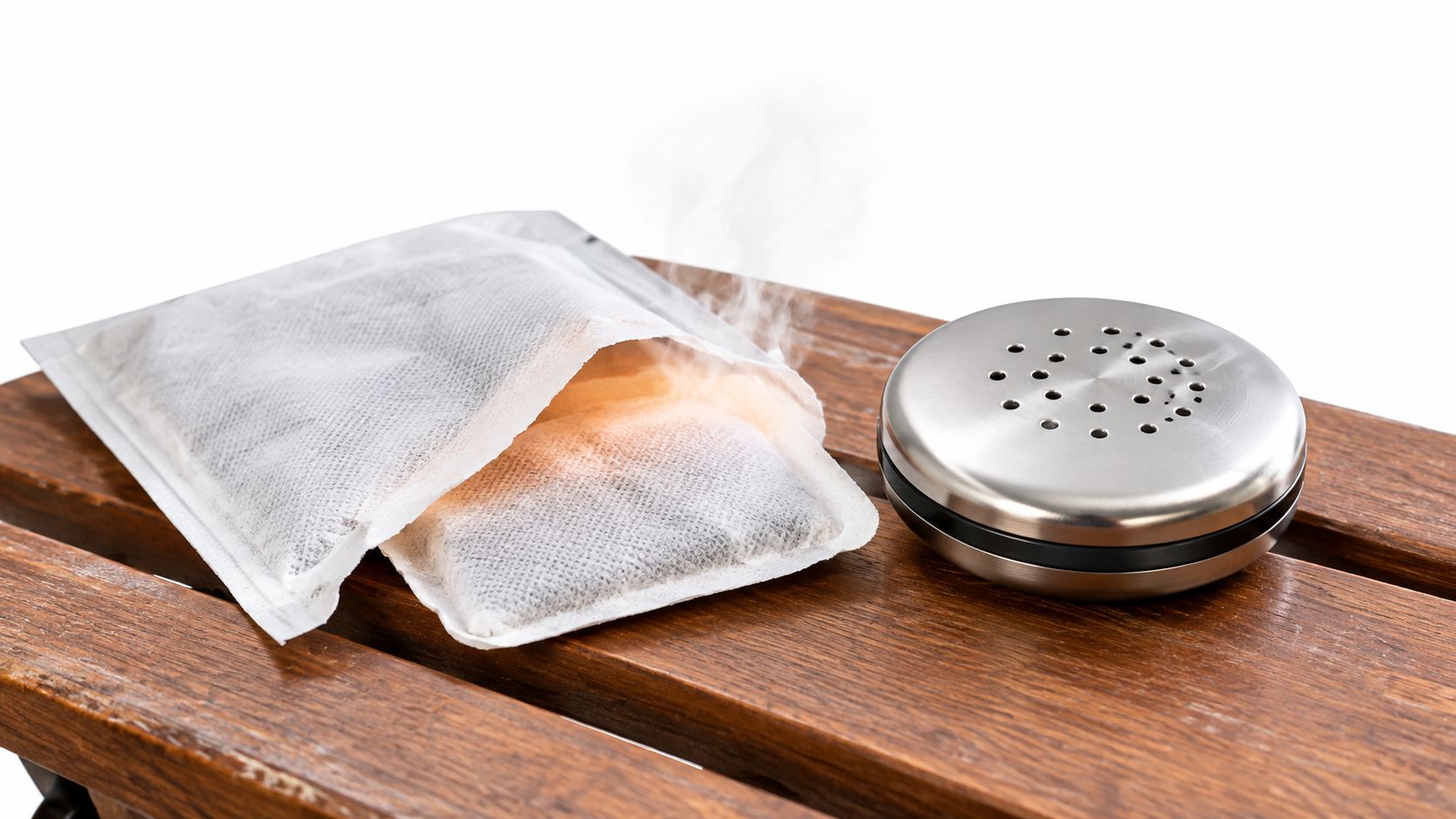
Disposable sachets heat through a reaction with oxygen. The contents commonly include iron powder, with salt and other materials helping regulate the process. Once the sealed pouch is opened, air reaches the contents and the reaction begins, as explained in this description of disposable air-activated warmers.
That mechanism creates three straightforward rules:
- Open the sachet before the round. It needs time to warm up.
- Give it access to air. Don't crush it inside an airtight plastic bag.
- Keep the pouch intact. Never cut it open, puncture it or empty the contents.
A jacket pocket or purpose-made hand-warmer pouch works better than wrapping the sachet tightly in impermeable plastic. The packet should have some space around it, while remaining separated from prolonged direct skin contact. A peak near 43°C can become uncomfortable in a tightly insulated pocket, particularly when held against the skin for a long time.
Reusable sodium acetate warmers behave differently. The liquid solution is primed into a supersaturated state, then the metal disc triggers crystallisation and releases heat. Resetting means dissolving the crystals again, normally by heating the warmer in hot water as the manufacturer specifies.
The chemistry is useful only because it changes the routine. A disposable sachet is ready to discard after it cools. A reusable model needs time, heat and careful inspection before it goes back into the golf bag.
Homemade versions aren't a clever shortcut. The Royal Society of Chemistry's guidance on reusable warmers warns that improvised plastic bags can pierce and spill, and advises against microwaving or boiling a homemade warmer in a pan because the plastic may have too low a melting point. A commercial unit with clear instructions is the safer choice.
Battery, Runtime and Charging in Real Conditions
Rechargeable electric warmers look attractive because they avoid single-use sachets and can offer a steady heat level. Their weak point is simple: a quoted runtime assumes a particular setting and a fully charged battery, while a UK round brings wind, cold pockets, rain and long pauses.
The warmer may spend much of the day in an insulated pocket, which helps retain heat but doesn't extend the battery's actual output. Higher settings also consume more power. A golfer who starts at maximum heat may have little left by the closing holes, especially if the device is also being used as a power bank.
The sensible buying checks are:
- Full-round runtime: the stated duration should cover the planned outing at the chosen heat setting.
- Charge indicator: a clear battery display is more useful than a vague light.
- Charging connection: the warmer should be easy to charge before leaving home.
- Water protection: the unit needs a dry pocket, even if the outer casing is described as splash-resistant.
- Shape: a bulky device can be awkward in a trouser pocket or restrictive inside a glove.
A pass-through charging feature can help on a winter morning, but it isn't a reason to carry a wet or exposed battery. Any lithium-powered warmer should be charged away from damp clothing, loose golf equipment and an unattended bag.
Storage rule: keep a charged electric warmer in a waterproof pocket, separated from wet gloves and clothing, and inspect the casing before charging.
Electric models make most sense for regular winter players who will charge them consistently. For an occasional cold round, a disposable sachet is usually less faff. For frequent use without batteries, a properly maintained reusable warmer is the middle ground.
Where to Put a Hand Warmer During the Round
Placement decides whether a warmer helps or becomes another object to manage. The preferred location is close enough to reach between shots, protected from rain and loose enough to let the heat circulate.
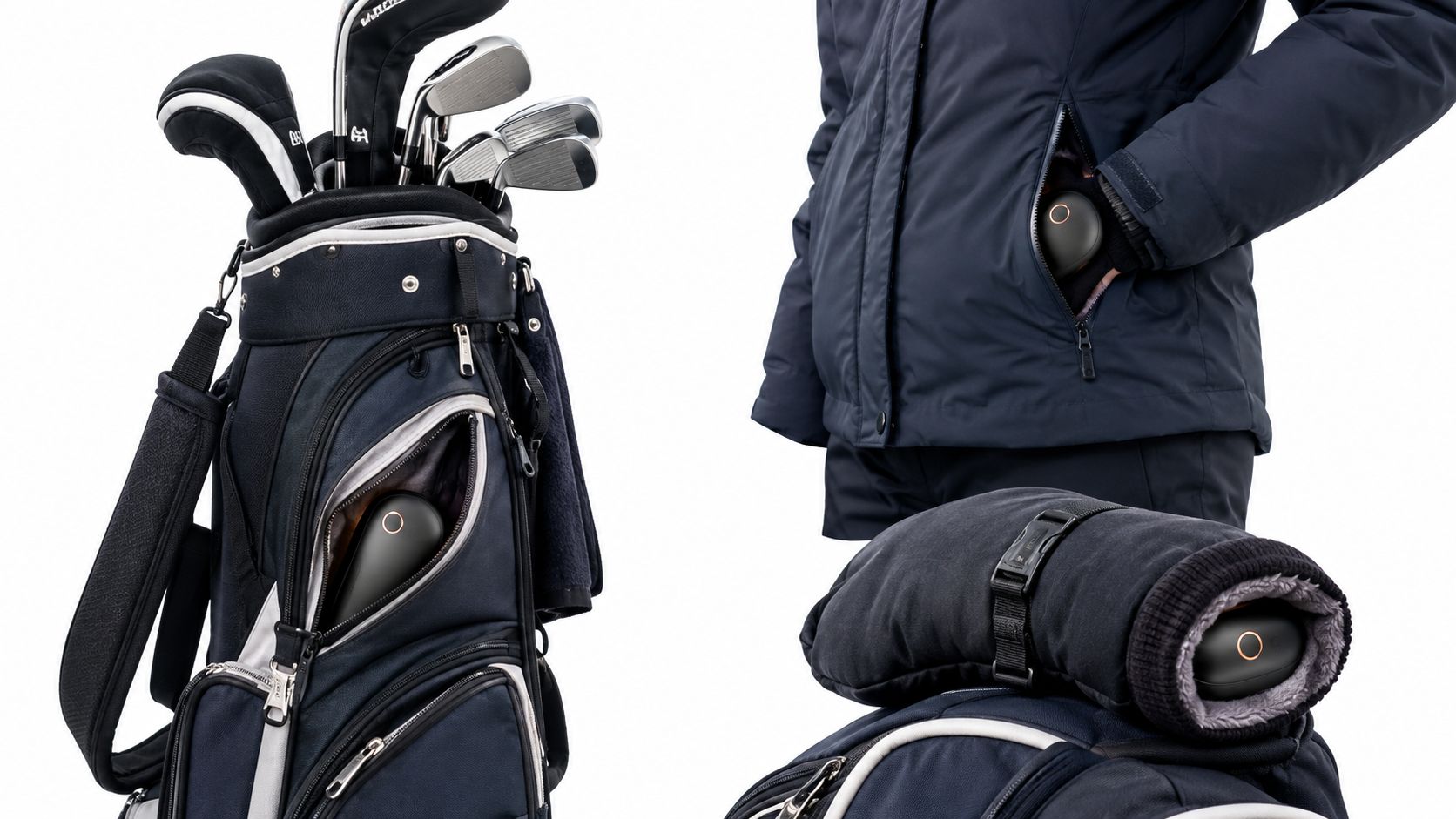
A winter jacket pocket is the best all-round option. The golfer can warm both hands between shots, then return the warmer before address. A pocket also keeps the unit close to the body and away from direct wind.
A mitten or dedicated hand-warmer pouch works even better when the weather is properly cold. The pouch should provide insulation and allow a little airflow for a disposable sachet. A sealed plastic bag traps moisture and can restrict the air needed for activation.
A pouch clipped to a trolley handle has one advantage, easy access, but it needs protection. Heavy rain can soak the warmer, the pouch and the gloves together. Keeping the pouch under a waterproof cover or moving it into a jacket pocket during bad weather is the safer choice.
A cart bag side pocket is useful for storage, not instant recovery. The warmer will be farther from the hands, and a cold, wet bag pocket won't provide the same comfort as a jacket or insulated mitten. It's a sensible spare location when the warmer isn't being used.
The correct routine is consistent:
- Between shots: warm both hands while walking or waiting.
- Before address: remove the warmer and place it securely in a pocket.
- During the swing: keep the hands on the club, not around the warmer.
- In heavy rain: move the warmer away from exposed bag storage.
Golfers completing a winter setup can find suitable pouches and gloves within the accessories and gloves collection. The right combination matters more than choosing the most powerful warmer.
When a Hand Warmer Will Not Save Your Round
A warmer can make a playable winter round more comfortable. It can't alter course conditions.
Frost delays, temporary greens and standing water change the quality of the golf itself. A golfer may have warm fingers and still face poor lies, restricted areas and a course that isn't accepting play. Daylight matters too. A warmer won't make a late finish safer or improve visibility.
The UK's winter course availability can be limited for reasons beyond temperature. A 2025/26 UK golf-club survey found that members' clubs closed courses or clubhouses for between one and 45 days because of maintenance or bad weather, with an average of 10 closure days. The same survey reported that temporary greens had increased from 56% of clubs in 2024, according to the Hillier Hopkins Golf Clubs Survey Report.
That's why a golfer should check the club's status before leaving home. The decision is practical:
- Cold but dry, open course: carry a warmer.
- Windy links, open course: use a warmer inside a wind-resistant mitten.
- Persistent rain: prioritise waterproof gloves and a dry spare.
- Frost delay or temporary greens: decide whether the round is worth the compromise.
- Soaked glove: replace or dry the glove. A pocket warmer won't restore its grip.
Wind deserves special attention. Forecasts for exposed UK courses can show sustained winds of approximately 11 to 18 mph with gusts from 25 to 40 mph at Royal Portrush, while Scrabo Golf Club forecasts show sustained winds around 19 to 21 mph with gusts up to 41 mph, according to Met Office golf-course forecasts. In those conditions, a warmer works best as a supplement to insulation, not as an exposed heat source.
Buying, Disposing and the Answers You Still Have
The best purchase is the one that matches actual winter habits. Occasional golfers should choose a simple disposable pack. Regular players should consider a reusable model only if they'll reset it correctly. Electric warmers suit golfers who want repeatable heat and won't forget to charge the device.
Before buying, check:
- Warm-up time: a sachet should be activated before the first tee.
- Comfortable duration: compare useful warmth, not just the largest advertised hour figure.
- Pocket fit: the warmer should sit securely without interfering with the swing.
- Weather protection: wet conditions demand a pouch or waterproof pocket.
- End of life: follow the packaging instructions and never open, burn, microwave or puncture a warmer.
UK guidance says chemical waste can harm health or the environment and should be treated, disposed of or recycled safely. It doesn't establish that every consumer warmer is hazardous, so golfers should check the specific packaging and official chemical waste guidance from the Health and Safety Executive before disposing of used or damaged units.
A reusable warmer reduces packet waste only when it is repeatedly used. A neglected rechargeable unit or abandoned reusable pouch is not a greener choice because it can be reused.
For broader cold-weather clothing and accessories, the winter collection is a sensible place to build the rest of the setup.
Frequently asked questions
Are golf hand warmers allowed under the Rules of Golf?
A hand warmer counts as equipment under Rule 4.3 of the R&A Rules of Golf, because equipment includes anything used, worn, held or carried by the player or caddie. Keeping it in a pocket for comfort is different from using an external aid to influence a stroke or deliberately warm a clubface. The R&A Rules of Golf should be checked alongside any local competition conditions.
Should a warmer go inside a golf glove?
Usually, no. A warmer can become too hot, restrict movement and make the glove feel bulky. It works better in a jacket pocket, mitten or dedicated pouch between shots, then comes out of the hand before the swing.
Can a disposable warmer be reused?
No. Once an air-activated sachet has cooled, it should be treated as single-use. It shouldn't be cut open, refilled or handled as though it were a reusable sodium acetate warmer.
Is a reusable warmer safer than a disposable one?
Neither type should be assumed safe if damaged or used incorrectly. Reusable models must be checked for leaks and reset according to their instructions. Disposable sachets should remain sealed and intact, with no direct exposure to their contents.
What should golfers do with used hand warmers?
Follow the product packaging first and check local council guidance, especially for leaking or damaged units. Don't burn, microwave, puncture or cut open a warmer. The safest disposal route depends on the product's materials and condition.
Are golf hand warmers worth carrying?
They're worth carrying for cold, playable rounds where finger comfort is the main problem. They're less useful when heavy rain, frost, temporary greens or poor daylight make the round marginal. The right warmer is a small comfort backup, not a substitute for gloves, waterproof clothing or common sense.
Fayrway offers golf gear curated by pros, including winter gloves, practical accessories and clothing selected for real UK playing conditions. Visit Fayrway to build a cold-weather setup that keeps hands comfortable without adding kit that fights the swing.


