
Buying Guides
Jr Golf Gloves: How to Size and Fit for Growing Hands
Sandy Grewal · 27 October 2026
Table of Contents

A child's glove can flap at the fingertips while the next size down strains across the knuckles. Measure the hand and check how the glove feels on the grip. The right fit lies flat, with room for full finger movement, so the child can hold the club comfortably as their hand grows.
By Fayrway Pros
Tags: Buying Guides, Junior Golf, Golf Gloves, Glove Sizing, Golf Accessories
Which Junior Glove Size and Hand to Buy
At the practice tee, a glove that bunches at the fingertips can make it harder for a child to hold the club comfortably. Age gives a rough starting point, but finger length and palm shape determine whether the glove sits properly. Choose for fit and grip comfort, not the age printed on a label.
Check the measurements first, then confirm which hand wears the glove and how its fastening adjusts. Ventilation helps air move through the glove, while an adjustable tab lets you secure it at the wrist without pulling the material tight. A smaller adult glove may still have fingers or a palm that do not suit a junior hand.
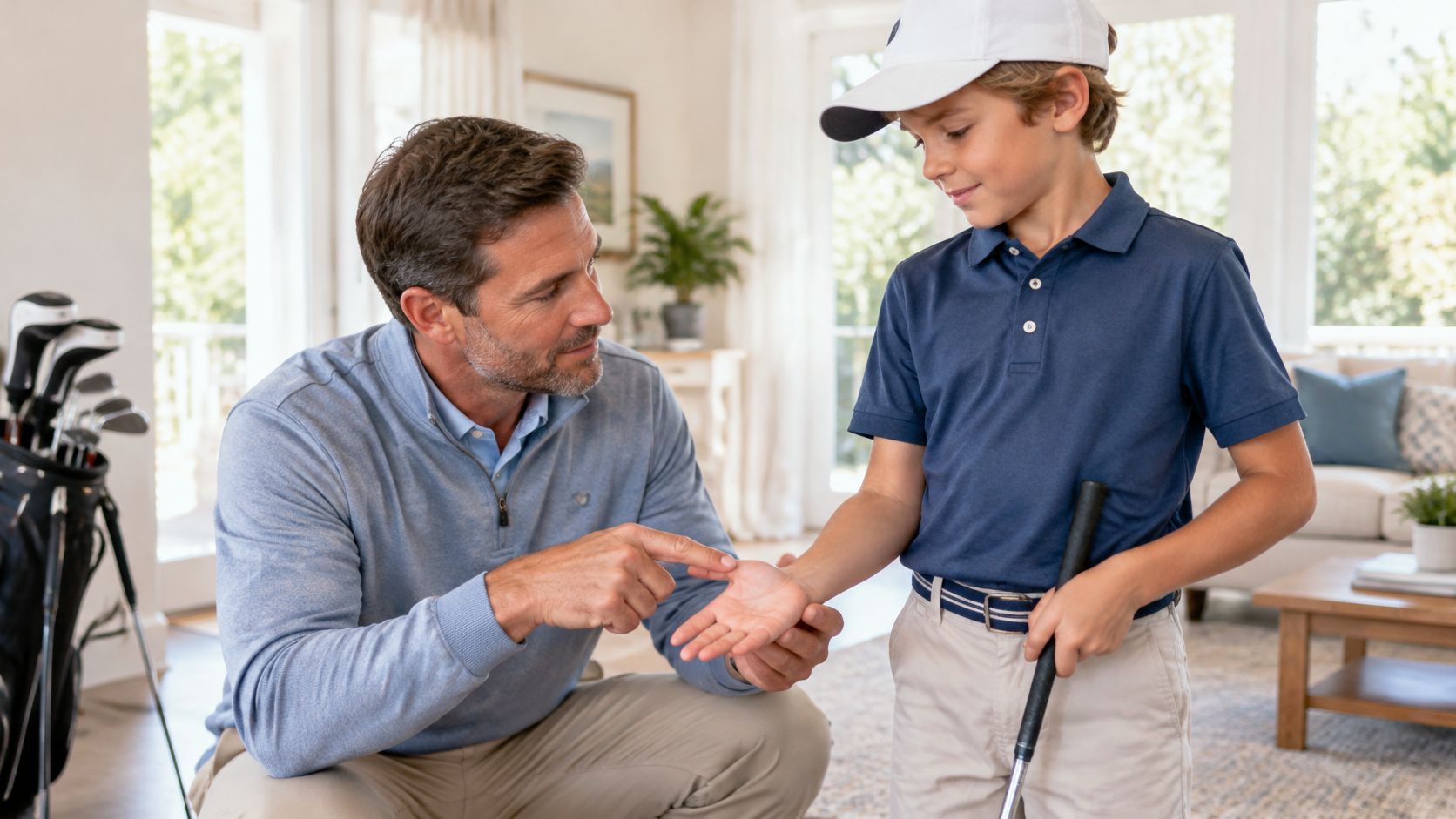
Confirm the playing side
The lead hand sits on the handle and wears the glove. A right-handed golfer usually wears it on the left hand; a left-handed golfer usually wears it on the right. Check the child's playing side before ordering, rather than relying on which hand they use for writing. The guide to which hand a golf glove goes on explains how playing side determines the glove hand.
If you are unsure, ask the coach or watch the child swing from a safe position behind them. Confirm the choice with the child's handedness for golf, not their writing preference.
Check shape before stretch
Fingers that extend past the glove's fingertips leave folds under the grip. A glove that pulls tightly across the palm can restrict movement and make holding the club uncomfortable. Look for a smooth fit across the palm and fingers, with enough room to flex freely.
- Palm and fingers: The material should lie flat without wrinkles.
- Fastening: The tab should hold the glove securely without squeezing the wrist.
- Listing details: Check whether the listing is for one glove or a pair.
Practical rule: Stretch helps a glove flex, but it cannot make the wrong finger length fit.
Keep the glove hand and measurements together when ordering. That gives you the details needed to choose the right playing side and compare the child's hand with the product's size chart.
How to Measure a Child's Hand and Match the Size Chart
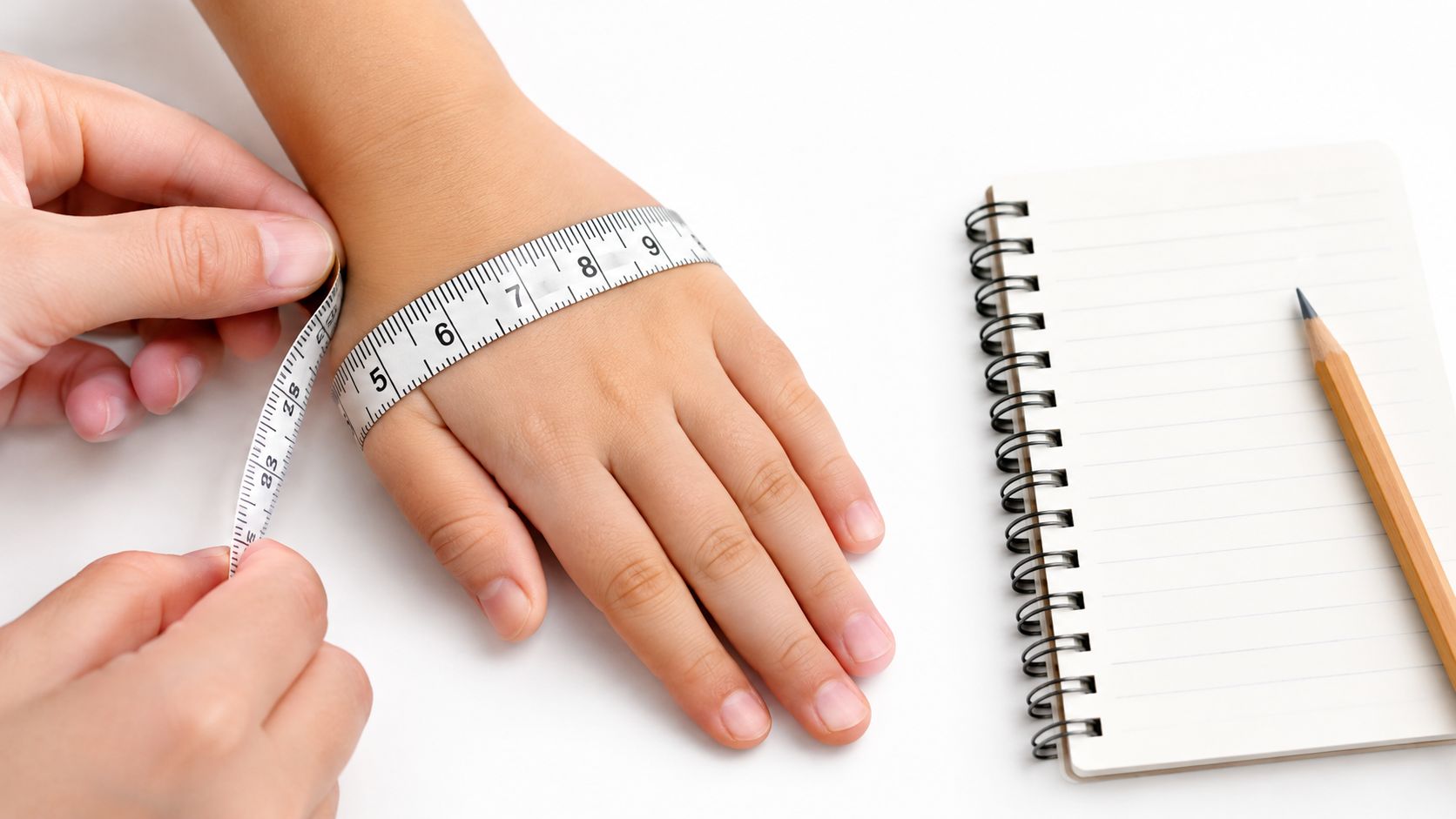
A glove size should follow the hand's measurements, not an age label. For a reliable comparison, record knuckle circumference and middle-finger length, then use the sizing instructions for the specific glove.
- Relax the hand. Hold it flat, fingers together, without gripping anything.
- Measure around the knuckles. Wrap a soft tailor's tape snugly around the knuckles, excluding the thumb. Keep it in contact with the skin without pulling tight.
- Measure the middle finger. Follow the chart's stated position, from between the index and middle fingers to the tip of the middle finger.
- Record the units. Write down the reading in centimetres and inches if the tape shows both. Avoid rounding a conversion.
- Compare both measurements. Use the product's own chart to match circumference and finger length; a size name alone is not enough.
The junior glove size guide is a useful starting point for checking measurement instructions. The table below gives junior-size comparisons for middle-finger length and hand circumference. Its approximate whole-hand figures are separate general glove-sizing references, not equivalent junior measurements.
Junior glove sizes by hand measurement
| Size | Middle-finger length | Hand circumference | Approximate hand length |
|---|---|---|---|
| Small | 2.8 to 3.0 inches | 6.36 to 6.61 inches | About 19 cm |
| Medium | 3.0 to 3.15 inches | 6.61 to 6.89 inches | About 20 cm |
| Large | 3.07 to 3.23 inches | 6.89 to 7.15 inches | About 21 cm |
| Extra-large and above | Use the product's own chart | Use the product's own chart | 22 cm or more |
Use the finger and circumference columns to compare junior sizing. The whole-hand column measures something different, so it should not override the glove maker's instructions or suggest that the measurements describe identical hands.
Measure around the knuckles
Place the tape around the widest part of the knuckles, leaving the thumb out. The finger measurement starts where the chart specifies, not at the wrist crease.
A ruler can help measure finger length, but it cannot follow the curve around the hand. If using string for circumference, mark where it meets, then lay it against a ruler without stretching it.
Keep the hand relaxed. If a reading seems inconsistent, reset the tape and measure again. Pulling it tighter gives a smaller figure, not a better fit; fingers held wide can also change the reading. Outgrowing one glove does not guarantee that the next size label will suit the child's hand.
When the measurements suggest different sizes
For example, a hypothetical knuckle measurement of 6.7 inches points towards medium in the table, while a middle finger measuring 2.9 inches points towards small. That mismatch is a reason to check the glove's shape, rather than choosing by one number alone.
Start with knuckle comfort, then check whether the fingers sit smoothly without excess material. A different cut may suit better than either size in that range.
A chart narrows the choice. Closing the hand around a club checks whether the shape works.
During a fitting, ask the child to open the hand fully, curl the fingers and take a normal address position. The fastening should secure the glove, not pull an unsuitable shape into place. Keep both readings with the product and size tried, so the next purchase can be compared with a clear record rather than memory.
Why Age Labels and Winter Gloves Mislead
Junior winter glove dimensions by size
A winter-glove chart gives a starting point, but its measurements apply to that glove's own sizing method. Use the dimensions below as a guide to that range, and check how the manufacturer defines width before comparing them with a playing-glove chart.
| Junior size | Palm width, using the guide's width label | Middle-finger length |
|---|---|---|
| Junior small | 16 cm | 6 cm |
| Junior medium | 17 cm | 6.5 cm |
| Junior medium-large | 17.5 cm | 7 cm |
| Junior large | 18.5 cm | 7.5 cm |
An age bracket describes the intended audience, not the shape of an individual child's hand. Labels can also differ between glove types, so match the child's measurements to the chart for the specific glove being considered.
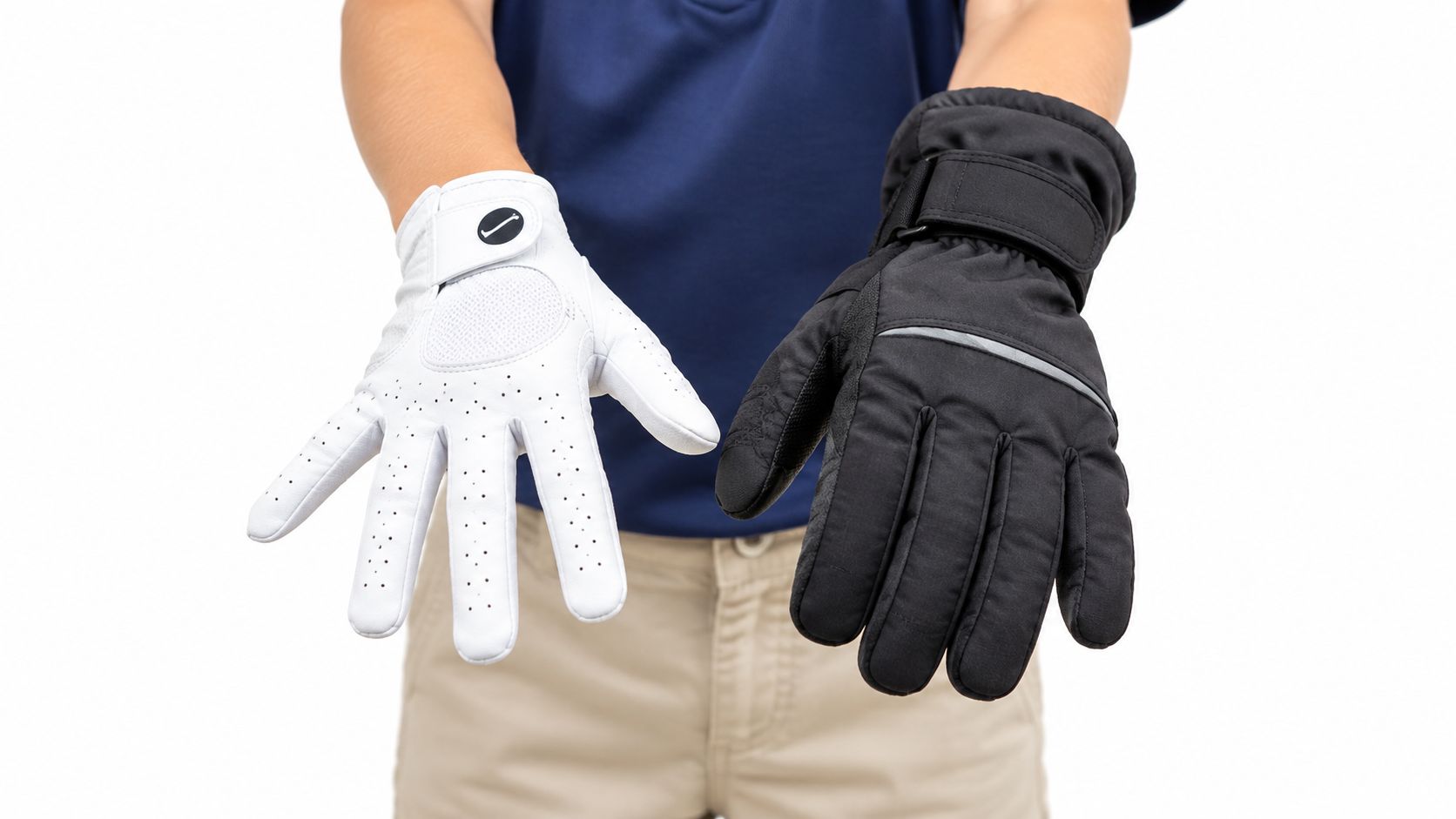
Choose for grip, not growing room
Extra room costs more in the long run than it saves. Loose material can bunch between the fingers and the handle, making it harder for a child to hold the club comfortably without squeezing more firmly. Choose a fit that works for the hand holding the club now.
Winter gloves add insulation, which can make the glove feel bulkier and reduce direct feedback through the handle. A child's usual summer-glove size may not feel the same in a winter model, even when the labels match. Check the winter-glove chart, then judge the fit with the club in hand.
Cold-weather comfort also involves what happens between shots. The guide to golf hand warmers covers another way to keep hands warm without relying on an oversized playing glove.
Treat age ranges as a rough browsing filter. Use the chart for the particular glove type to narrow the choice, then make the decision around comfort and a secure grip.
Materials and Durability for Junior Gloves
Junior glove materials compared for British conditions
| Material | Feel and grip | Wet British conditions | Breathability | Best suited to |
|---|---|---|---|---|
| Cabretta leather | Soft, tactile contact and direct feedback | Best kept from becoming soaked; needs careful drying | Check perforation and back-panel construction | Careful players playing mainly in dry spells |
| Synthetic or microfibre palm | Consistent contact with a practical gripping surface | Sensible for damp grass and repeated handling, but not automatically waterproof | Look for ventilated fingers and lightweight panels | Practice-heavy juniors in changeable weather |
| Winter glove | More warmth, less direct feel | Useful in cold and drizzle; check weather protection | Insulation generally makes it warmer and less airy | Cold-weather rounds and range sessions |
The material affects feel, grip and care, while the glove still needs to suit the hand holding the club. Soft leather may fold beneath the fingers if it is too large. A durable synthetic palm can feel restrictive if the glove is too narrow.
A junior glove with a MicroTac palm and reinforced patches illustrates two useful features to assess: the material across the gripping surface and the construction in areas subject to wear.
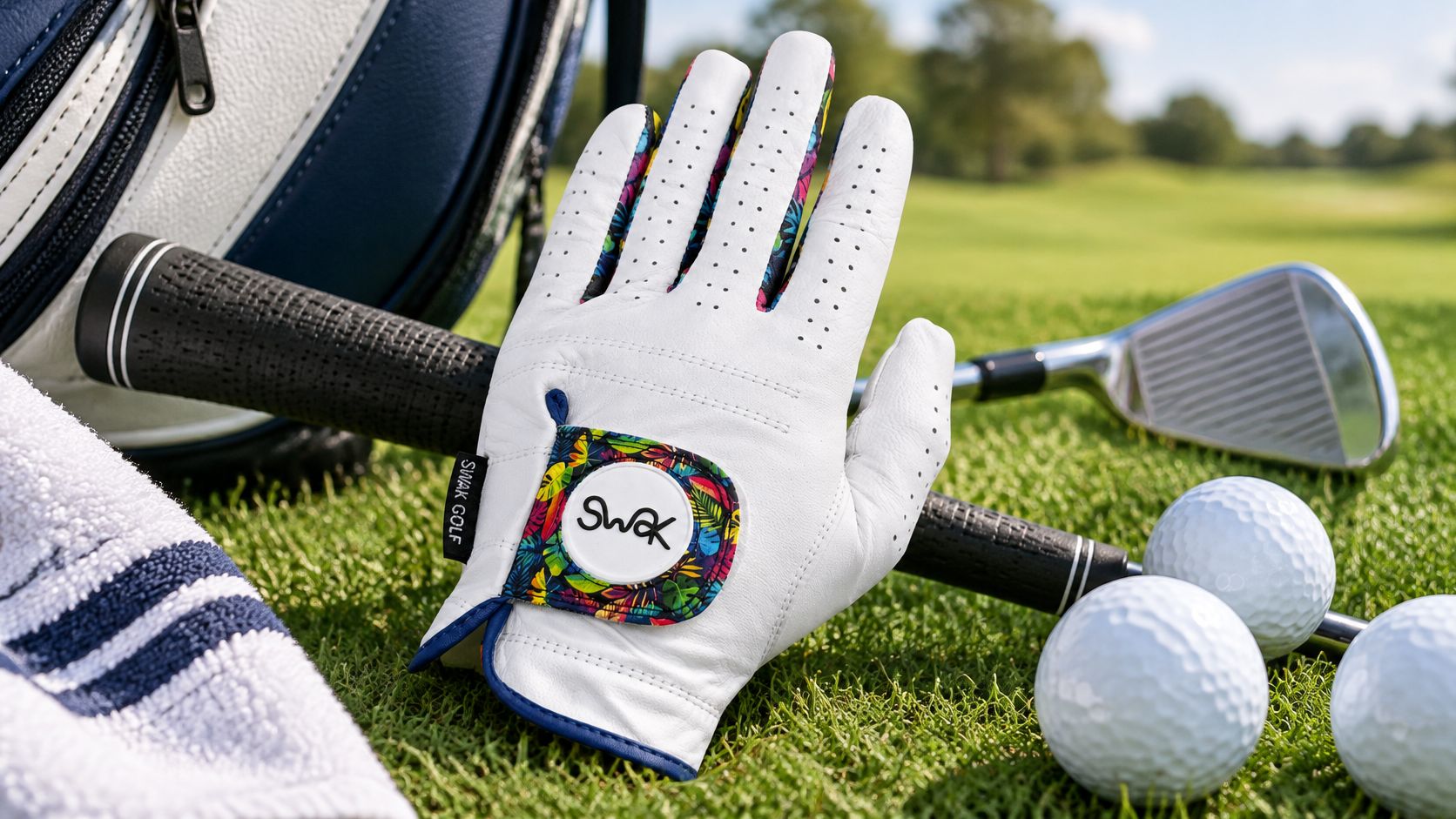
Inspect the construction on a grip
- Palm contact: Check that the material lies flat against the handle, without a ridge beneath the fingers.
- Seam alignment: Finger seams should stay straight rather than twist around the fingertips.
- Closure tension: The fastening should close comfortably, without needing to be pulled hard across the wrist.
Cabretta leather is one option in the accessories collection. Check that the size chart suits the measured hand; an adult or unisex label alone does not establish a suitable junior fit.
After a leather glove gets soaked, let it dry patiently away from direct heat. Shape it naturally rather than leaving it crumpled in a pocket of the golf bag.
For a junior who practises often in changeable British weather, a hard-wearing synthetic or microfibre palm is a practical starting point. A less frequent player who cares for their glove may prefer leather's tactile feel. The trade-off is straightforward: synthetic materials can suit regular use in mixed conditions, while leather rewards careful handling with a softer, more direct feel.
Checking Fit Each Season and Knowing When to Replace
Junior glove fit problems, causes and fixes
| Symptom | Likely cause | Fix |
|---|---|---|
| Fingertips fold or bunch during the grip | Finger sections too long | Re-measure finger length and try a shorter-fitting cut |
| Club shifts inside the hand | Excess width or a worn palm | Adjust the tab, then check width and palm condition |
| Child grips hard or fingers feel cramped | Glove tight across the knuckles | Re-measure circumference and try a roomier fit |
| Palm shiny, thin or stretched | Wear from repeated use | Replace even if finger length remains suitable |
| Fingertips press into the ends or seams pull | Hand has outgrown the glove | Measure again rather than automatically ordering the next label |
| Glove slips when wet or sweaty | Moisture, saturation or inadequate ventilation | Dry the glove and assess a more breathable or weather-appropriate option |
Growth and wear can look similar from a distance. A glove that fitted last season may now pull across the knuckles, while another may have stretched enough to move against the handle.
The closure tab can remove modest looseness, but it can't restore a worn gripping surface. Tightening it until the wrist feels compressed isn't a repair.
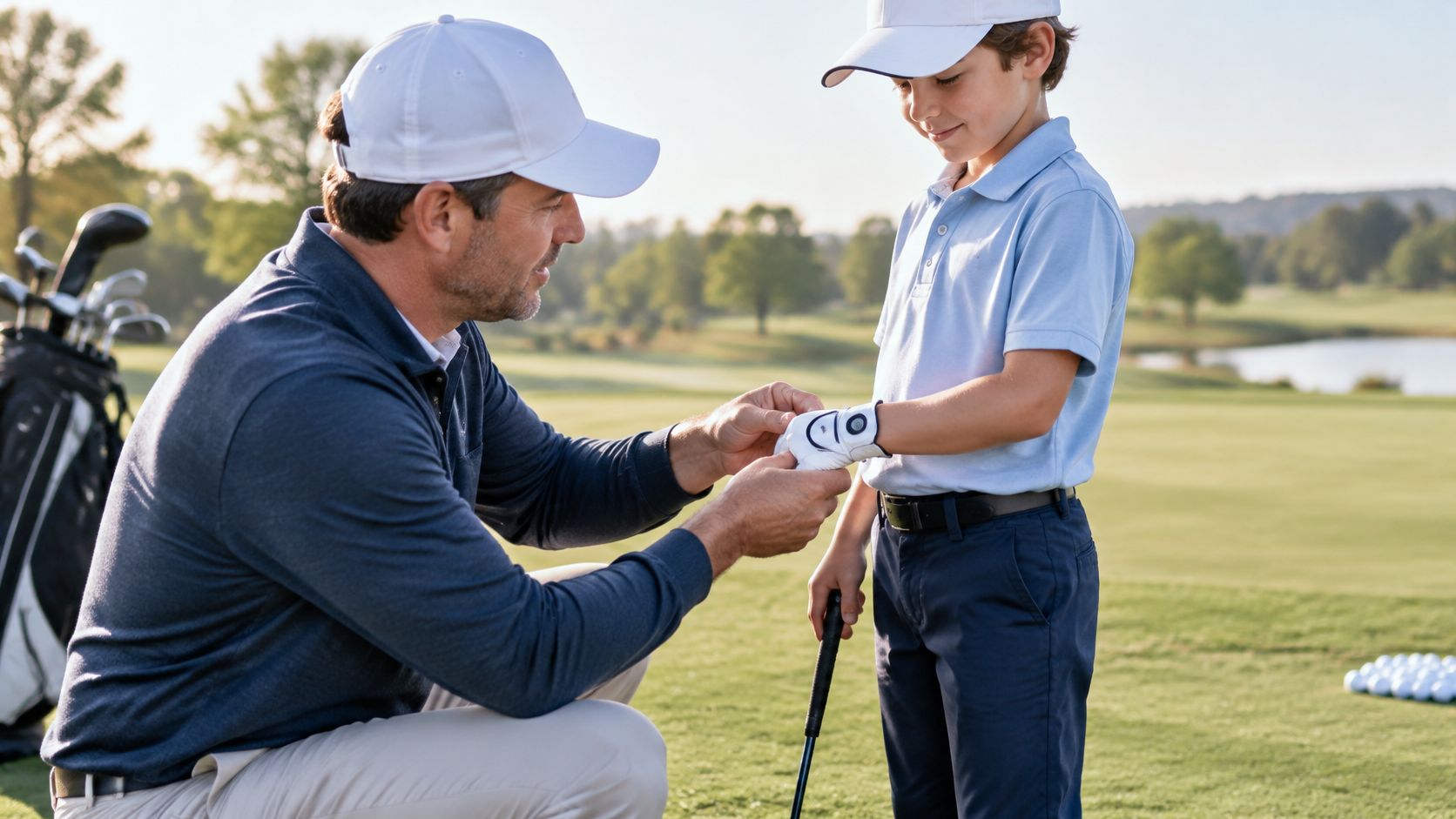
Distinguish contact from pressure
Fingertips should sit neatly, not push hard into the ends when the hand closes. Replacement becomes necessary when growth creates pressure there, seams begin pulling, or the measured hand no longer matches the intended fit.
Palm condition matters independently of growth. Shiny, stretched or thinning material means the glove may be finished even when its outline still looks right.
A child squeezing harder deserves a proper check rather than an immediate larger size. The glove may be cramped, loose, damp or worn, and the handle itself should also be clean.
Before the next purchase, keep the counter checklist short:
- Current measurements: The glove hand has been measured this season.
- Playing side: The child's playing side has been confirmed.
- Correct chart: The brand's chart matches the glove type being considered.
- Proven fit: Start with a single glove until its fit has been tested during play.
What a Junior Glove Costs Each Season
The seasonal cost depends on how often a glove is used and how quickly a child outgrows it. Frequent practice can wear a glove sooner; a child who plays occasionally may get more use from the same one. Budget around actual use rather than assuming one glove will last the season.
Count usable gloves, not pack contents
Work out the cost by dividing what you pay by the number of gloves the child can use before growth or wear makes them unsuitable. A multipack can be good value once the chosen size has proved comfortable in play and frequent practice makes the spare gloves useful.
If the fit is still uncertain, extra gloves risk sitting unused or compromising grip comfort. Prioritise the glove that lets the child hold the club comfortably; spare stock comes later.
Budget priority: Pay for the right glove before buying spares.
The Golf Foundation reported 9,247 young players across its 2025 GolfSixes League, with 88% saying they wanted to play more golf, in its GolfSixes League impact report. That enthusiasm can help parents judge whether the child's practice routine may use additional gloves, rather than treating a larger purchase as automatically worthwhile.
Put spending toward a comfortable grip first. A secure closure and a palm suited to the child's practice routine also matter; a premium finish comes after those practical needs. There is no single seasonal allowance that suits every junior golfer, so review use and condition as the season progresses.
Frequently Asked Questions
Can a child wear an adult glove?
A child can wear an adult glove if its cut suits their hand and the fingers do not bunch when gripping the club. Check the product's measurements, not just its smallest size label.
Should a parent buy a multipack to save money?
Buy spares only once the current size feels comfortable during play. Extra gloves are poor value if the child outgrows the size before using them.
How often should a junior glove be replaced?
Replace it when growth affects the grip or the palm has worn enough to compromise contact. Check both as the child's playing routine changes, rather than relying on a fixed calendar.
What happens if a child is between sizes?
Check the product's chart and try a different cut if neither size allows a comfortable grip. The glove should let the child move their knuckles freely, with fingers that are not left too long.
Fayrway offers golf equipment and accessories curated by pros, with guidance on who each option suits. Bring the child's hand measurements when choosing, and match the glove to their grip and practice routine rather than their age.


