
Buying Guides
Your First Time at the Driving Range: What to Bring and What to Do
Fayrway Pros · 6 September 2026
Table of Contents

Your first trip to the driving range is the easiest possible way to start golf: you turn up, buy a basket of balls, and hit as many as you like from your own bay with no pressure and nobody waiting on you. You do not need much, a glove, some clubs (bring your own or borrow the range's), and comfortable trainers. The rest is just knowing how the place works and having a simple plan so you actually improve rather than tire yourself out.
Here is exactly what to expect, what to bring, a beginner-friendly first session, and the bits of range etiquette worth knowing before you go.
How does a driving range actually work?
It is simple once you have done it once. You buy a token or a card at the desk, which gives you a basket or a set number of balls. You take a bay, usually a covered spot with a rubber mat and an automatic tee or a pile of balls, and hit out towards the distance markers on the field. When you run out, you buy more or go home. Many UK ranges are floodlit and open late, and some now have screen-based systems like Toptracer that show how far each shot flew.
- Pay at the desk for a basket, small, medium or large, a medium is plenty to start.
- Pick a free bay and set your balls or use the auto-tee.
- Aim at the distance markers (usually 50, 100, 150 yards) to gauge your carry.
- Hit off the mat, no need for your own tees, the mat has a rubber one.
What should you bring to the driving range?
Very little. Balls are provided, so you mostly just need a glove and something to hit with. If you do not own clubs yet, most ranges hire or lend a club or two, just ask at the desk.
- A glove for your lead hand, it saves blisters when you are hitting a lot of balls
- Clubs, your own if you have them, or borrow from the range
- Trainers, spikes are not needed on the mats
- Water, hitting balls is more of a workout than it looks

FootJoy WeatherSof 2-Pack
- Stops blisters over a big basket of balls
- The world's number one glove
- Two in a pack for backup
Price on Amazon
£19.49
Not got clubs yet? Our best beginner club sets guide covers complete sets that are ideal for the range and the course.
What should you hit in your first range session?
Resist the urge to grab the driver and swing as hard as you can, that is how beginners groove bad habits and go home aching. Build the session instead:
- Warm up with easy half swings using a wedge or 9-iron for the first ten balls.
- Work up through the bag: wedge, then a mid iron, hitting a few good ones before moving on.
- Aim at a target every single ball, never just hit into space.
- Finish with the driver for the last handful, once you are loose.
- Quality over quantity: a slow medium basket beats bashing a large one.
Driving range etiquette
Ranges are relaxed, but a few courtesies apply:
- Stay in your own bay and never walk out onto the field to fetch balls.
- Give players space, do not stand close behind someone mid-swing.
- Keep it tidy, put empty baskets back and bin your rubbish.
- Wait your turn at busy times rather than hovering over a taken bay.
Practising at home between range trips
You improve fastest with small, frequent practice, and you can do a lot at home. A set of alignment sticks fixes the single most common beginner fault (aiming badly), foam balls let you make full swings in the garden safely, and a mat and net turn a spare ten minutes into useful reps.

CHAMPKEY Alignment Sticks, 3-Pack
- Trains alignment, the most common fault
- Collapsible so they fit any bag
- Use them at the range and at home
Price on Amazon
£9.99

Callaway Soft Flight Practice Balls
- Foam balls you can hit in the garden
- Realistic flight over a short distance
- Safe around windows and people
Price on Amazon
£13.15

CHAMPKEY Golf Hitting Mat
- Heavy-duty turf mat for home reps
- Protects your wrists and the lawn
- Pairs with a net for full swings
Price on Amazon
£29.99
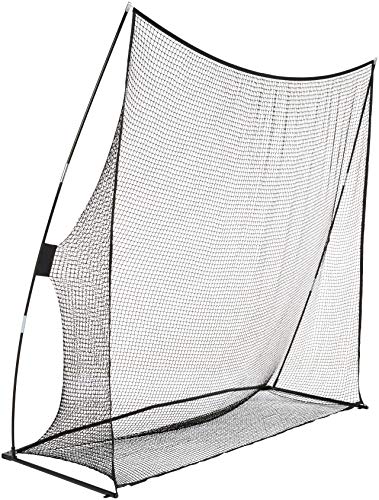
Amazon Basics Driving Practice Net
- Portable net for the garden
- Lets you hit real balls at home
- Folds down for storage
Price on Amazon
£54.99
Frequently asked questions
Do I need my own clubs for the driving range?
Not necessarily. Many ranges hire or lend clubs, so you can turn up and try golf with nothing of your own. If you have a set, bring it. When you are ready to buy, a complete beginner set is the best value way to get everything you need for the range and the course.
How much does a driving range cost?
You pay per basket of balls, typically a few pounds for a small basket up to around a fiver for a large one, and club hire, if needed, is usually a small extra. A medium basket is plenty for a focused first session.
What should I hit first as a beginner?
Start with a wedge or 9-iron and easy half swings to warm up, then work up through your irons hitting at a target. Leave the driver until the end when you are loose. Aiming at a specific marker every ball beats swinging hard into open space.
Do I need golf shoes for the range?
No. You hit off rubber mats, so comfortable trainers with a bit of grip are perfectly fine. Save golf shoes for when you play on the course, where spikes help on grass and slopes.
How often should I go to the range?
Short, regular sessions beat occasional marathons. One focused medium basket a week, plus a little practice at home with alignment sticks and foam balls, will improve you faster than hitting a huge bucket once a month.
Can I practise golf at home?
Yes. Alignment sticks train your aim indoors or in the garden, foam practice balls let you make full swings safely, and a hitting mat with a net lets you hit real balls at home. These are cheap and make your range time and course rounds more productive.
Ready to hit the range?
Buy a medium basket, take a glove, borrow or bring clubs, and build your session from wedge up to driver aiming at a target every ball. When you are ready for the course, read what you need for your first round of golf, and to buy your own kit see our beginner club sets and golf gloves guides.


