
Buying Guides
Best Golf Balls for Beginners and High Handicappers
Fayrway Pros · 28 August 2026 · Updated 16 September 2026
Table of Contents
- At a glance: the best golf balls for beginners in 2026
- What golf ball should a beginner use?
- Two-piece, soft feel or premium: what is the difference?
- Does compression matter for a slower swing?
- How many golf balls should a beginner buy at once?
- What about premium tour balls like Pro V1?
- Our top picks in detail
- What we would skip
- Frequently asked questions
- Ready to choose?

For most beginners and high handicappers the best golf ball to buy on Amazon is the Srixon AD333 Srixon AD333£18.99Buy on Amazon, a soft, forgiving all-rounder that flies straight and lasts. If you want the softest feel off the face, the Callaway Supersoft
 Callaway Supersoft£24.95Buy on Amazon is the low-compression pick. Losing a lot of balls while you learn? A big Wilson Ultra Distance multipack
 Wilson Ultra Distance multipack£28.95Buy on Amazon keeps the cost per ball low.
When you are new to the game, the ball you play matters far less than most marketing suggests. You want soft feel, straight flight and a price that does not sting when one sails into the trees. Below are the best golf balls you can get on Amazon right now with fast delivery, grouped by the job they do best, plus honest guidance on why premium tour balls are the wrong buy while you are learning.
At a glance: the best golf balls for beginners in 2026
| Ball | Type | Best for | Price |
|---|---|---|---|
| Srixon AD333 | Two-piece soft | Best overall for beginners | £18.99 |
| Callaway Supersoft | Low compression | Best soft feel | £24.95 |
| TaylorMade Distance+ | Two-piece distance | Best distance | £21.99 |
| Wilson Ultra Distance 24-Ball | Two-piece multipack | Best value multipack | £28.95 |
| Titleist TruFeel | Soft two-piece | Best premium-ish step up | £24.95 |
| Wilson Staff Model X | Four-piece urethane | Best for higher swing speeds | £39.99 |
Prices are pulled live from Amazon and update through the day.
What golf ball should a beginner use?
A soft, two-piece, low-compression ball. As a beginner or high handicapper your swing speed is usually moderate and your strike is not yet consistent, so you want a ball that feels soft off the clubface, launches easily and flies as straight as possible. That points you at value two-piece balls such as the Srixon AD333 or the Callaway Supersoft, not the firm, high-spin tour balls the pros play. The extra spin on a premium ball tends to exaggerate a slice or hook, which is the last thing you need while you are grooving your swing. Buy a soft ball, buy plenty of them, and spend the difference on lessons or a course fee.
Two-piece, soft feel or premium: what is the difference?
Golf balls are built in layers, and the number of layers largely sets the character of the ball.
- Two-piece distance balls have a large core and a tough cover. They are durable, fly a long way, spin less around the greens and are the cheapest to run. Ideal while you are learning.
- Soft, low-compression balls are still usually two-piece but built to compress easily at slower swing speeds, so they feel soft and launch high without needing a fast swing. The friendliest feel for most club golfers.
- Premium multi-layer urethane balls add extra layers and a soft urethane cover for greenside spin and control. They reward a fast, repeatable swing, and they cost a lot more. This is the pros' choice, and mostly wasted on a beginner.
For your first few seasons, stick to the first two groups. You will play better golf, and you will not flinch when you lose one.
Does compression matter for a slower swing?
Yes, more than almost any other spec. Compression measures how much a ball squashes at impact. A lower-compression ball squashes more easily, so a slower or moderate swing can still load it properly and get good launch and distance. A high-compression ball needs a fast swing to compress fully, and if you cannot reach that speed it simply feels hard and loses distance. Most beginners and high handicappers benefit from a soft, low-compression ball such as the Callaway Supersoft or Srixon AD333. If you have a genuinely fast, repeatable swing and want more control, that is when a firmer, higher-compression ball like the Wilson Staff Model X starts to earn its place.
How many golf balls should a beginner buy at once?
More than you think, because you will lose them. A high handicapper can easily lose three or four balls in a round while learning, so buying single premium sleeves is an expensive habit. Buy in dozens or in a multipack such as the Wilson Ultra Distance 24-ball box, and play the same model every round so your feel stays consistent. Playing one ball model matters more than which model you pick: your distances become predictable, which helps your scoring more than any tour-ball technology.
What about premium tour balls like Pro V1?
Premium tour balls such as the Titleist Pro V1 are superb, but they are the wrong buy for most beginners and high handicappers. Their appeal is a soft urethane cover that generates extra greenside spin and precise flight control, and unlocking that benefit needs a fast, consistent swing and a sharp short game. If your strike is still developing, that extra spin usually magnifies a slice or hook off the tee, and you will not get the greenside control that justifies the price, which can be double or more per dozen. Since you also lose several balls a round while learning, you are paying a premium to hit good shots into the woods. Learn on soft, forgiving two-piece balls, then step up once your ball-striking justifies it. When that day comes, see what our pros stock in the Fayrway golf balls range.
Our top picks in detail
Srixon AD333: best overall for beginners
Verdict: the ball we would hand most beginners and high handicappers first. Soft feel, straight flight and a keen price make it the obvious all-rounder.
The AD333 has been a favourite of club golfers in Britain for years, and the latest generation keeps the formula: a soft feel off every club, an easy high launch and enough greenside bite to help around the green, all in a durable two-piece ball. It is soft enough for moderate swing speeds yet flies plenty far. If you want one ball that does everything well while you learn, this is it.
- Pros: soft feel, straight and long, durable cover, trusted by UK club golfers.
- Cons: not a tour-spin ball, less greenside spin than urethane.
More on this ball: full Srixon AD333 review.
Srixon AD333
- Soft feel with easy high launch
- Straight, forgiving flight
- Durable two-piece build
Price on Amazon
£18.99
Callaway Supersoft: best soft feel
Verdict: the pick if you want the softest possible feel off the face at a moderate swing speed.
The Supersoft is one of the softest, lowest-compression balls on the market, which is exactly why it suits slower and moderate swings so well. It compresses easily so you still get good launch and distance without swinging out of your shoes, and it feels wonderfully soft on chips and putts. Straight-flying and forgiving, it is a brilliant confidence ball for a high handicapper who wants the ball to feel easy.
- Pros: exceptionally soft feel, very low compression, easy launch, straight flight.
- Cons: less spin and control for faster swingers, soft cover marks a little quicker.
More on this ball: full Callaway Supersoft review, or see how it compares in Supersoft vs Srixon Soft Feel.
Callaway Supersoft
- Very low compression, ultra-soft feel
- Easy launch at moderate swing speeds
- Straight, forgiving flight
Price on Amazon
£24.95
TaylorMade Distance+: best distance
Verdict: the one to grab if you just want to see the ball go a long way and keep the price down.
The Distance+ is a no-nonsense two-piece ball built to fly far off the tee. A large, responsive core and a low-spin design help you get more roll and hold a straighter line, which is a real help when your swing is not yet grooved. It will not spin much around the greens, but at this price and for this job, that trade is exactly right for a beginner chasing extra yards.
- Pros: long off the tee, low spin for straighter flight, keen price, big-brand build.
- Cons: firmer feel than the softest balls, limited greenside spin.
More on this ball: full TaylorMade Distance+ review.

TaylorMade Distance+
- Long, low-spin two-piece flight
- Straighter ball flight off the tee
- Keen everyday price
Price on Amazon
£21.99
Wilson Ultra Distance 24-Ball: best value multipack
Verdict: the sensible buy while you are still losing a few every round. Two dozen balls for a price that does not hurt.
When you are new to the game, the cost per ball matters more than any clever technology, because plenty of them end up in ponds and hedges. This 24-ball box of Wilson Ultra Distance keeps things simple and cheap: a durable two-piece ball that flies straight and long, in a quantity that means you never have to ration your good balls for competition day.
- Pros: excellent cost per ball, 24 balls in the box, durable, straight flight.
- Cons: basic feel, not built for greenside spin.
More on this ball: full Wilson Ultra Distance review.
Wilson Ultra Distance 24-Ball
- Two dozen balls per box
- Low cost per ball while you learn
- Durable, straight two-piece flight
Price on Amazon
£28.95
Titleist TruFeel: best premium-ish step up
Verdict: the natural step up when your ball-striking is improving and you want a recognised premium brand without tour-ball pricing.
The TruFeel is Titleist's softest ball and the smart way to get into the brand without paying Pro V1 money. It feels soft, flies straight and gives a touch more control around the greens than a pure distance ball, while staying friendly for moderate swing speeds. If you are moving out of pure beginner territory and want a ball that looks and feels the part, this is the one to try.
- Pros: soft feel, trusted Titleist quality, straight flight, sensible price for the brand.
- Cons: costs more than pure value balls, still not a full tour-spin ball.

Titleist TruFeel
- Titleist's softest ball
- Soft feel with straight flight
- A sensible step into the brand
Price on Amazon
£24.95
Wilson Staff Model X: best for higher swing speeds
Verdict: for the improving golfer with a genuinely fast, repeatable swing who wants more spin and control.
If you have moved past the beginner stage and swing quickly, a firmer four-piece urethane ball like the Staff Model X gives you the greenside spin and flight control a soft distance ball cannot. It rewards a solid strike with more stopping power on approach shots and a more penetrating flight in the wind. It is the priciest ball here and overkill for a true beginner, so buy it only when your swing speed and short game can actually use what it offers.
- Pros: urethane cover for greenside spin, control in the wind, tour-style construction.
- Cons: needs a fast swing to shine, priciest here, wasted on a slower or inconsistent swing.
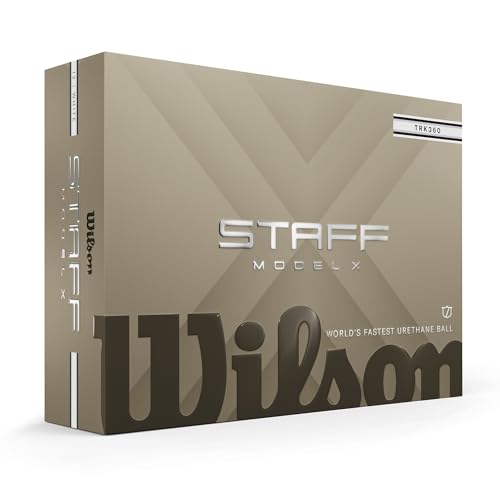
Wilson Staff Model X
- Four-piece urethane construction
- Greenside spin and control
- Best for fast, repeatable swings
Price on Amazon
£39.99
What we would skip
A few things to avoid while you are learning:
- Cheap lake balls of unknown grade. Bags of recycled balls sold as a mixed jumble can be waterlogged, scuffed or a random assortment of models, so your feel and distance change from shot to shot. If you buy recycled at all, buy a single named model in a stated grade, not a mystery mix.
- Premium tour balls as a beginner. A Pro V1 or similar costs double, spins more and punishes an inconsistent strike. You will lose them just as fast as cheap balls and get none of the greenside benefit. Save them for when your handicap earns them.
- A different ball every round. Chopping and changing models means your distances never settle. Pick one soft two-piece ball and stick with it so your yardages become predictable.
- Fake-RRP multipacks. A bag of balls listed at "was £39.99, now £9.99" is a £9.99 bag of balls. Judge on the real price and the genuine reviews, not the imaginary saving.
Want it narrowed to one ball? Take our free 90-second Ball Finder quiz: six questions, and it names your match from the sixteen balls we rate.
Frequently asked questions
What is the best golf ball for a beginner?
A soft, low-compression two-piece ball such as the Srixon AD333 or Callaway Supersoft. These feel soft, launch easily at moderate swing speeds and fly straight, which suits a developing swing far better than a firm, high-spin tour ball. They are also affordable enough to lose a few without worrying.
Do expensive golf balls really make a difference for high handicappers?
Not much. Premium tour balls are built for fast, consistent swings and a sharp short game, and their extra spin can exaggerate a slice or hook. For most high handicappers a soft two-piece ball plays just as well, costs far less and stings a lot less when it goes in the water.
What compression golf ball should a slower swing use?
A low-compression ball, roughly in the soft category. Lower compression squashes more easily at slower swing speeds, so you still get good launch and distance. Balls like the Callaway Supersoft and Srixon AD333 are designed exactly for this and feel soft off every club.
How many golf balls does a beginner need?
Buy at least a dozen, and a 24-ball multipack is smarter still, because high handicappers commonly lose three or four balls a round while learning. Playing the same model every round keeps your feel and distances consistent, which helps your scoring more than any single ball feature.
Are lake or recycled golf balls worth it for beginners?
They can be, but only if bought carefully. A single named model in a stated grade is fine to practise with. Avoid cheap mixed bags of unknown grade, as waterlogged or random balls change your feel and distance shot to shot, which is unhelpful when you are trying to build consistency.
What is the difference between a distance ball and a soft ball?
A distance ball has a firmer feel and lower spin to maximise roll and straightness off the tee. A soft ball compresses more easily for a softer feel and higher launch at moderate swing speeds. Beginners usually favour soft balls for feel and forgiveness, though pure distance balls suit anyone chasing extra yards.
Ready to choose?
For most beginners and high handicappers the Srixon AD333 is the safe, does-everything pick. Choose the Callaway Supersoft if you want the softest feel, the TaylorMade Distance+ for extra yards, the Wilson Ultra Distance multipack to keep the cost per ball low, the Titleist TruFeel as your step up, and the Wilson Staff Model X once your swing is fast and consistent. You can also browse the golf balls range at Fayrway to see what our pros are stocking.


