
Comparisons
Cabretta vs Synthetic Golf Gloves: Which Is Right for You?
Fayrway Pros · 27 August 2026
Table of Contents

Cabretta leather gives you the softest, most natural feel and the best grip in dry weather, while synthetic (all-weather) gloves are cheaper, tougher and hold up far better in rain and sweat. If you want feel and play mostly in fair conditions, buy a cabretta glove like the FootJoy CabrettaSof FootJoy CabrettaSof£21.00Buy on Amazon. If you want durability and a glove that works wet or dry, a synthetic like the Callaway Weather Spann
 Callaway Weather Spann£10.95Buy on Amazon is the smarter buy. Many golfers carry both.
At a glance: cabretta vs synthetic golf gloves
| Attribute | Cabretta leather | Synthetic (all-weather) |
|---|---|---|
| Feel and grip | Softest, most natural, best dry grip | Good grip, slightly less feel |
| Wet weather | Goes slippery and hard when soaked | Grips well when wet, dries soft |
| Durability | Wears faster, needs care | Tougher, lasts longer per glove |
| Cost per glove | Higher | Lower, often sold in multipacks |
| Best for | Dry rounds, feel players, low handicaps | UK weather, sweaty hands, everyday use |
How do cabretta and synthetic gloves actually differ?
The difference is the material. Cabretta is a soft sheepskin leather that moulds to your hand and gives the thinnest, most connected feel on the grip. Synthetic gloves use engineered fabrics and microfibre that trade a little of that raw feel for grip that holds up when the glove gets wet or sweaty.
In practice cabretta feels lovely for the first several rounds, then softens further and eventually thins out and tears, usually at the thumb or the heel of the palm. A synthetic glove feels slightly firmer from new but keeps performing round after round, and it shrugs off rain and sweat that would leave leather stiff and slick.
When should you choose cabretta?
Choose cabretta if feel matters most to you and you mostly play in dry or fair conditions. Lower handicap golfers and anyone who likes to feel the club through impact tend to prefer it, because the thin leather gives the most feedback and the best dry grip.
The trade-off is care and cost. A cabretta glove wants to be taken off between shots, dried flat rather than balled up in the bag, and rotated with a second glove so each one recovers. Look after it and it rewards you. Neglect it, or wear it in the rain, and it will not last long.
When should you choose synthetic?
Choose synthetic if you play in typical UK weather, have sweaty hands, or just want a glove that lasts and does not need babying. All-weather gloves grip well wet or dry, dry out soft rather than crispy, and cost far less per glove, which is why they so often come in multipacks.
They are also the sensible pick for beginners and high volume players. If you are at the range twice a week or you sweat through leather in summer, a synthetic glove gives you consistent grip for a fraction of the running cost. You lose a touch of premium feel, and most golfers never miss it.
Our picks
FootJoy CabrettaSof
The default cabretta glove for a reason: soft premium leather, a trusted brand, and a fit that suits most hands. The best pure feel here for dry rounds.
FootJoy CabrettaSof
- Soft premium cabretta leather
- Excellent dry feel and grip
- Trusted FootJoy fit and quality
Price on Amazon
£21.00
Titleist Perma-Soft
A supple cabretta glove with a slightly more durable finish than most leather gloves. A great pick if you want leather feel but hate how quickly cheaper cabretta wears.
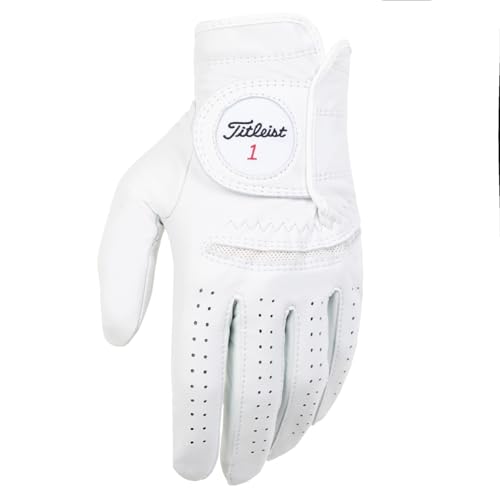
Titleist Perma-Soft
- Soft cabretta leather feel
- Durable finish for a leather glove
- Classic Titleist fit
Price on Amazon
£20.00
Callaway Weather Spann
A synthetic all-weather glove that grips brilliantly wet or dry and keeps its feel for ages. The one to reach for when the forecast is grim or your hands run hot.
Callaway Weather Spann
- Grips well wet or dry
- Soft synthetic feel
- Holds up to rain and sweat
Price on Amazon
£10.95
FootJoy WeatherSof 2-Pack
A tough, grippy synthetic sold in a pair, so you always have a spare in the bag. The best-value everyday glove for golfers who play a lot.

FootJoy WeatherSof 2-Pack
- Durable all-weather synthetic
- Comes as a pair for spares
- Reliable grip round after round
Price on Amazon
£19.49
Want the full rundown on fit, sizing and every top glove for the year? Read our best golf gloves 2026 guide, where we compare cabretta and all-weather options in detail.
Frequently asked questions
Is cabretta or synthetic better for grip?
In the dry, cabretta gives the softer, more natural grip and the best feel through impact. In the wet or when your hands sweat, a synthetic all-weather glove grips better because it does not go slick or stiff. The best answer depends on the conditions you usually play in.
Do cabretta gloves last as long as synthetic?
No. Cabretta leather is softer and thinner, so it wears faster and tears sooner, usually at the thumb or palm. Synthetic gloves are tougher and last noticeably longer per glove, which is why all-weather models often come in multipacks and cost less to run over a season.
Which glove is best for wet UK weather?
A synthetic all-weather glove is the clear pick for rain. It keeps its grip when soaked and dries out soft rather than crispy, whereas cabretta leather goes slippery when wet and hardens as it dries. Many UK golfers keep a dry synthetic glove in the bag for exactly this.
Should beginners buy cabretta or synthetic?
Most beginners are better off with a synthetic glove. It is cheaper, more durable, and forgiving of being balled up in the bag or worn in poor weather. Save cabretta for when you want the extra feel and you are ready to look after it properly between shots.
Can you wear a cabretta glove in the rain?
You can, but you should not if you can avoid it. Rain makes cabretta leather slippery, then stiff and hard once it dries, which shortens its life and hurts your grip. Switch to a synthetic all-weather glove when it is wet and keep the cabretta for dry rounds.
How do I make a cabretta glove last longer?
Take it off between shots, dry it flat rather than scrunched in a pocket, and rotate two gloves so each one recovers. Keep it out of the rain, and store it flat away from heat. Treated well, a cabretta glove lasts far longer than one left to fester in the bag.
If you want feel above all and mostly play dry, go cabretta. If you want durability and reliable grip in any weather, go synthetic. For the full breakdown of sizing, fit and the top gloves this year, read our best golf gloves 2026 guide.


