
Buying Guides
Best Golf Tees 2026: Castle vs Wooden vs Plastic
Fayrway Pros · 27 August 2026
Table of Contents

For most golfers the best all-round tee is a good wooden peg, and the Pride wooden tees Pride wooden tees£12.54Buy on Amazon are the classic buy: a trusted brand in a big bag for pennies a peg. For consistent driver height every time, a step tee like the FINGER TEN castle tees
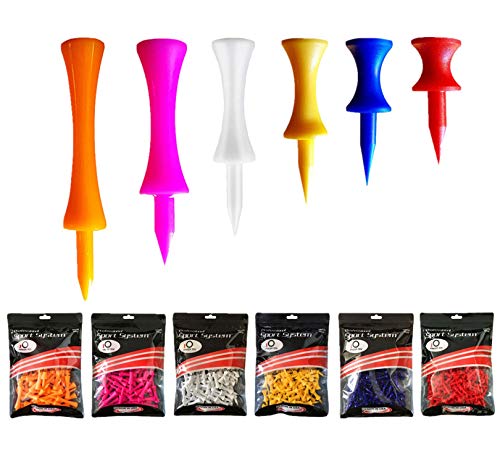 FINGER TEN castle tees£8.99Buy on Amazon takes the guesswork out. Want tees that last? The Brush T
 Brush T£12.99Buy on Amazon barely breaks.
A tee is the cheapest thing in your bag and the one you replace most often, so it pays to buy the right sort rather than grabbing whatever is in the shop bin. Below are the best golf tees you can get on Amazon right now with fast delivery, grouped by the job they do best, plus honest guidance on when castle, wooden and plastic each earn their place.
At a glance: the best golf tees for 2026
| Tee | Material | Best for | Price |
|---|---|---|---|
| Pride Wooden Tees (135 pack) | Wood | Best wooden | £12.54 |
| FINGER TEN Castle Step Tees | Plastic castle | Best for consistent height | £8.99 |
| Amazon Basics Recycled Tees | Recycled plastic | Best durable plastic | £9.60 |
| Brush T Premium Tees | Brush top | Best for durability and distance | £12.99 |
| TH Golf Bamboo Tees (100 pack) | Bamboo | Best bulk value and eco | £4.99 |
| PGA TOUR Booster Tees | Plastic | Best for drivers (tall) | £12.99 |
Prices are pulled live from Amazon and update through the day.
What tee height for a driver?
For a modern driver, tee the ball so about half of it sits above the crown of the clubhead at address. In practice that means a long tee, roughly 70mm to 83mm, pushed into the ground until only the top part shows. Teeing higher promotes an upward strike and lower spin, which is what you want off the big stick. For irons and hybrids you want the ball much lower, just clipping the top of the peg. This is exactly where a castle or step tee helps, because it stops at a fixed depth and gives you the same height on every hole rather than a guess each time.
Castle vs wooden vs plastic: does it matter?
It matters more than most golfers think, because each material trades off in a different way. There is no single best tee, only the best tee for how you play and what you care about.
- Wooden and bamboo tees. The traditional choice. They feel natural, they are cheap in bulk, and bamboo is biodegradable, so most clubs are happy to see them. The trade-off is they snap, so you get through more of them.
- Castle and step tees. A collar or "castle" on the shaft stops the tee at the same depth every time, so your ball sits at a repeatable height. Great for consistency, especially with a driver, and most are plastic so they last.
- Plastic tees. The most durable and the hardest to break, and many are made from recycled material now. Some golfers feel a rigid plastic tee adds a touch of resistance at impact compared with wood, though the difference is tiny.
One quick etiquette note: a few clubs prefer wooden or bamboo tees on the course because they rot down, whereas a broken plastic tee can sit in the turf for years. If in doubt, a good bamboo tee keeps everyone happy.
Which tees last longest?
Brush tees and solid plastic tees last by far the longest. A brush tee replaces the cup with soft bristles the ball rests on, so there is very little for the clubhead to snap, and a single one can last dozens of rounds. Rigid plastic step tees come next, since the thick collar resists breaking. Wooden and bamboo tees are the shortest-lived, which is exactly why they are sold in bags of 100 or more. If you hate constantly restocking, buy a small pack of brush or plastic tees for the driver and keep a bag of cheap bamboo pegs for irons and par threes.
What about premium and specialist tees?
There is a whole world of performance tees beyond the basics: zero-friction three-prong tees that claim less contact and more distance, precision-milled anti-slice tees, and beautifully finished hardwood tees you would almost feel bad snapping. Some of the low-resistance designs do show a marginal gain in launch monitor testing, but for the vast majority of golfers the height you tee it at matters far more than the tee itself. If you want to experiment with a specialist design or pick up something a bit nicer than a bin bag of pegs, browse the curated options in the Fayrway golf tees range. For everyday golf, the Amazon picks below cover every need without overthinking it.
Our top picks in detail
Pride Wooden Tees: best wooden
Verdict: the tee we would hand most golfers first. Pride is the tee brand the pros actually use, and a big bag costs almost nothing.
Pride Professional Tee System wooden tees are the benchmark for a reason: cleanly made, consistent length, and a colour band that marks the depth so you get a repeatable height. This 135 bag keeps you stocked for a season of golf, and because they are real wood they behave naturally off the clubface and rot down if left on the course. They snap like any wooden tee, but at this price you simply reach for another.
- Pros: trusted pro-used brand, huge bag for the money, colour depth guide, natural feel.
- Cons: wood snaps, so you get through them, one length per pack.
Pride Wooden Tees
- The tee brand the pros use
- Big 135 bag for pennies a peg
- Colour band marks a repeatable height
Price on Amazon
£12.54
FINGER TEN Castle Step Tees: best for consistent height
Verdict: the fix for teeing the ball a different height every hole. A step collar sets the depth for you.
These castle tees have a stepped collar that stops the peg at a fixed depth in the ground, so the ball sits at exactly the same height every single time. The mixed-size pack lets you set one height for the driver and a lower one for irons and hybrids. They are plastic, so they take a lot more abuse than wood, and the bright colours are easy to find in the rough. For anyone chasing a repeatable set-up, this is the smartest few pounds you can spend.
- Pros: repeatable height every time, mixed sizes for driver and irons, durable plastic, easy to spot.
- Cons: plastic can feel slightly firmer than wood, some clubs prefer wooden pegs.
FINGER TEN Castle Step Tees
- Step collar sets the same height every time
- Mixed sizes for driver and irons
- Durable, easy-to-spot plastic
Price on Amazon
£8.99
Amazon Basics Recycled Tees: best durable plastic
Verdict: a no-nonsense, hard-wearing plastic tee made from recycled material, at a sensible price.
If you want plastic durability without a novelty gimmick, these do the job. At 8.3cm they are a genuine driver-height tee, the four-prong cup cradles the ball securely, and they are made from 100 percent recycled plastic, so you get the longevity of plastic with a lower footprint. A solid everyday choice for the golfer who is tired of snapping wooden pegs on the first tee.
- Pros: hard-wearing, tall driver height, 100 percent recycled plastic, keen price.
- Cons: single tall length, plastic sits differently in firm ground than wood.

Amazon Basics Recycled Tees
- Made from 100 percent recycled plastic
- Tall 8.3cm driver height
- Four-prong cup holds the ball securely
Price on Amazon
£9.60
Brush T Premium Tees: best for durability and distance
Verdict: the tee that almost never breaks, for golfers who like the idea of less contact at impact.
The Brush T swaps the traditional cup for soft, flexible bristles, so the clubhead brushes through with very little to snap. That means one tee can last dozens of rounds, and the brand claims the reduced contact frees up the ball for a touch more carry. Whether or not you buy the distance claim, the durability is real: this is the last tee many golfers buy for the season. It comes in a small pack because you simply need fewer.
- Pros: extremely durable, minimal contact at impact, consistent height, one lasts for ages.
- Cons: higher cost per tee, the brush feel divides opinion.
Brush T Premium Tees
- Soft bristles instead of a cup, so it rarely breaks
- One tee lasts dozens of rounds
- Consistent height every drive
Price on Amazon
£12.99
TH Golf Bamboo Tees: best bulk value and eco
Verdict: the cheap, green, guilt-free option. A big bag of biodegradable pegs for the price of a coffee.
Bamboo is stronger than standard softwood and fully biodegradable, so these tees last a little longer than basic wooden pegs and break down naturally if left in the turf. This 100 pack comes in mixed colours and sizes, giving you a driver height and a lower iron height in one buy. If you just want a reliable, club-friendly tee you never have to think about, this is it.
- Pros: very cheap per tee, biodegradable and club-friendly, stronger than softwood, mixed sizes.
- Cons: still snaps eventually like all wood tees, colours vary by pack.
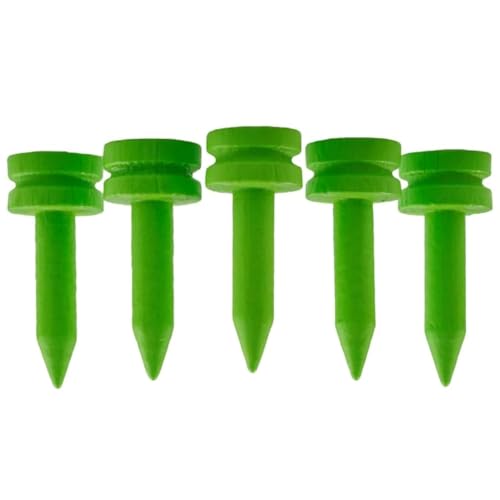
TH Golf Bamboo Tees
- Biodegradable and club-friendly bamboo
- 100 pack in mixed sizes and colours
- Stronger than standard softwood pegs
Price on Amazon
£4.99
PGA TOUR Booster Tees: best for drivers (tall)
Verdict: a branded, extra-tall tee for golfers who tee it high and want durability on the driver.
These PGA TOUR Booster tees come in tall driver lengths up to 80mm plus a shorter option, so you can tee the ball right up for a high launch off the big stick and drop lower for fairway woods. The plastic build resists breaking better than a wooden peg at that height, where wood tends to snap, and the recognisable brand gives some reassurance. A tidy multi-pack for the golfer who lives on the tee box.
- Pros: tall driver height, recognisable brand, durable plastic, mixed lengths included.
- Cons: plastic rather than wood, fewer per pack than a bulk bag.

PGA TOUR Booster Tees
- Extra-tall lengths up to 80mm
- Durable plastic that resists snapping
- Recognisable PGA TOUR branding
Price on Amazon
£12.99
What we would skip
A few things to watch when you shop:
- Bags of ultra-cheap unbranded wooden tees. The very cheapest softwood pegs are often rough and split as you push them in. A branded bamboo or Pride bag costs pennies more and lasts far longer.
- Fake-RRP mega multipacks. A bag of 500 tees listed with a huge crossed-out RRP and a tiny "sale" price is worth its real price, not the imaginary saving. Judge on the actual price per tee and the volume of genuine reviews.
- Gimmick anti-slice tees as a cure. A tee cannot fix a slice caused by your swing path or face angle. Some low-resistance designs give a marginal gain, but do not expect a peg to straighten your ball flight.
- Solid plastic tees at clubs that ban them. A snapped plastic tee lingers in the turf for years, so a handful of courses ask for wood or bamboo only. Check before you fill your bag with plastic.
Frequently asked questions
What is the difference between castle, wooden and plastic golf tees?
Wooden and bamboo tees are natural and biodegradable but snap fairly easily. Castle tees have a collar that sets a fixed, repeatable height and are usually plastic, so they last. Plain plastic tees are the most durable overall. Each trades feel, longevity and eco-friendliness differently, so pick by what you value most.
What height should I tee the ball for a driver?
Tee it so roughly half the ball sits above the crown of the driver at address. In practice that means a long tee, around 70mm to 83mm, pushed in until only the top shows. A higher tee encourages an upward strike and lower spin, which helps you carry the ball further off the tee.
Are castle or step tees worth it?
Yes, if you struggle to tee the ball at a consistent height. The collar stops the tee at the same depth every time, so the ball always sits where you want it. That repeatability helps a lot with the driver, and most castle tees are plastic, so they also last longer than wood.
Which golf tees last the longest?
Brush tees last by far the longest, because soft bristles replace the cup and there is little for the clubhead to snap. Solid plastic and plastic castle tees come next thanks to their thick collars. Wooden and bamboo tees are the shortest-lived, which is why they are sold in large bags.
Are plastic golf tees allowed on the course?
At almost every club, yes. A small number of courses ask for wooden or bamboo tees because plastic can litter the turf if it breaks. If you play a mix of courses, keeping a bag of biodegradable bamboo tees in your bag means you are welcome everywhere.
How many golf tees do I need?
For wooden or bamboo tees, a bag of 100 or more lasts a casual golfer a full season, since you snap a few each round. For durable brush or plastic tees you need only a handful, as each one lasts dozens of rounds. Many golfers keep both: cheap pegs for irons, a durable tee for the driver.
Ready to choose?
For most golfers a bag of Pride or bamboo tees covers everyday golf for pennies a round. Add a FINGER TEN castle tee if you want a repeatable height, a Brush T or Amazon Basics plastic tee if you hate snapping pegs, and the PGA TOUR Booster if you tee it tall for the driver. You can also browse the golf tees range at Fayrway to see what our pros are stocking.


